Different types of dimming curves may be incorporated in dimmers, software for lighting control systems, and output devices like LED drivers irrespective of the actual protocol used to communicate between them.


Different types of dimming curves may be incorporated in dimmers, software for lighting control systems, and output devices like LED drivers irrespective of the actual protocol used to communicate between them.
Let’s talk about dimming and dimming curves, and a variety of attributes that you should consider, inquire about, then specify what you actually want.

Hipster business successful teamwork concept, business group assembling jigsaw puzzle
The Lighting Controls Association (LCA) now offers EE305: Protocols as a new course in its popular Education Express program.

The Lighting Controls Association is pleased to welcome Toggled IQ as a new member.

The Pacific Northwest National Laboratory’s (PNNL) Ruth Taylor recently contributed an article to LD+A Magazine examining lessons learned during a two-year evaluation of connected lighting systems.

Rebate fulfillment firm BriteSwitch recently stated that about 20% of commercial lighting rebate programs are offering additional or bonus rebate opportunities.
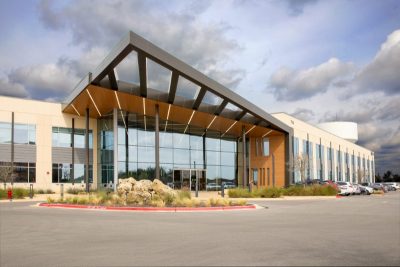
Hubbell Lighting has signed a 15,000-square-foot lease at Summit II at La Frontera to create the future home of its lighting controls Design Center of Excellence and training facility.

The U.S. Department of Energy’s (DOE) Interior Lighting Campaign is undergoing a fresh launch as the Integrated Lighting Campaign in June 2020. The program’s core goal of market transformation is the same, with many of the same services and benefits to participants, but the promoted suite of technologies is now going beyond LED adoption toward integrated systems. The Lighting Controls Association is proud to support this program as a member of its Organizing Committee and an inaugural Supporter.

The Lighting Controls Association is pleased to welcome Cooper Lighting Solutions as a new member.

The Lighting Controls Association (LCA) now offers EE202: Automatic Plug Load Control as a new course in its popular Education Express program.
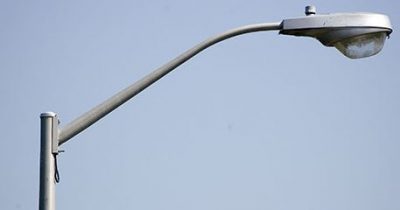
Published by the National Electrical Manufacturers Association (NEMA), American National Standard for Roadway and Area Lighting Equipment—Non-Locking (Button)–Type Photocontrols covers the electrical and mechanical interchangeability of nonlocking type photocontrols for mounting within a roadway or off-roadway luminaire. These controls are commonly called “button” photocontrols. This lighting industry Standard was updated to add ingress protection specifications, update labeling requirements, define environmental requirements, and define load test procedures.

The Lighting Controls Association is proud to announce the latest offerings in lighting controls from industry-leading manufacturers. Check them out!
The National Electrical Manufacturers Association (NEMA) published NEMA GD 4-2020 COVID-19 Cleaning and Disinfecting Guidance for Electrical Equipment. Managing the SARS-CoV-2 (COVID-19) virus requires proper cleaning and disinfecting of equipment, so Members of NEMA have developed specific guidance to answer common questions for how to maintain cleanliness while preserving the functionality and integrity of electrical equipment.
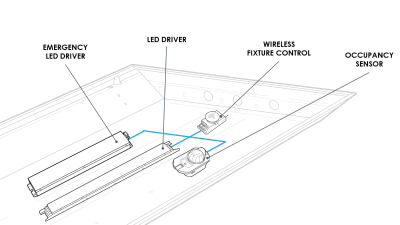
Craig DiLouie, LC, CLCP, education director of the Lighting Controls Association and a freelance lighting journalist, recently interviewed Gilles Abrahamse, Vice President/GM Digital Luminaire Components – Acuity Brands Lighting, about connected lighting for an article that will be published in the August issue of tED Magazine. Here’s the transcript.
Current stay-at-home regimes resulting from the COVID-19 pandemic has had a significant impact on how the construction industry works, including education, with online distance-education becoming more popular. The Lighting Controls Association is proud to offer Education Express, a free, robust series of courses covering all aspects of lighting control, including technology, application, design, and commissioning.

Writing for the NEMA blog, Michael Poplawski, Principal Investigator for Connected Lighting Systems Research, Pacific Northwest National Laboratory, says connected lighting systems have a potential to provide a range of electric grid services. PNNL is now actively investigating these capabilities.

Lutron Electronics, the industry leader in smart, scalable lighting control solutions, and Cree Lighting, a global market leader in innovative LED lighting solutions, are teaming up to introduce a variety of new connected lighting products to the market: Cree Lighting indoor and outdoor fixtures offered with Lutron wired and wireless digital fixture control technologies.

Craig DiLouie, LC, CLCP, education director of the Lighting Controls Association and a freelance lighting journalist, recently interviewed Roger Karner, President, Signify US, about connected lighting for an article that will be published in the August issue of tED Magazine. Here’s the transcript.

The leading trade associations representing America’s electrical supply chain, including manufacturers, distributors, and installers, united to ensure that lawmakers at the state and local levels keep the power on for everyone as they make decisions related to the current COVID-19 health crisis.
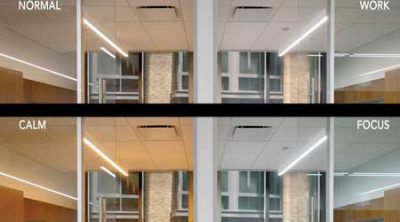
BOM Magazine recently published an article advising building owners and managers about how to select the right tunable-white lighting solution for their buildings. Written by Craig DiLouie, LC, CLCP, education director for the Lighting Controls Association, the article covers applications and benefits, theory of operation, types, typical approaches, protocols, and application considerations.

Lighting Controls Systems may use a wide variety of lighting controls wiring to connect their systems throughout a project. How that wiring, which may use multiple conductors, connects from device to device is an important component to identify and specify on any project. A termination is the end of a conductor and it may facilitate proper communication between devices or help avoid connecting the wrong conductors to a device. Terminations will sometimes also have very specific landing points for its conductors known as “pinouts,” which maintain a consistent connection pattern for all conductors. This article discusses common terminations that a Lighting Controls Designer may come across.
In this engaging guest post, Steve Mesh describes the lessons learned from the “Living Lab,” an ambitious installation of networked lighting controls in an existing building.
The National Electrical Manufacturers Association (NEMA) published NEMA ESM1-1 2019 Electrical Submeter—General Requirements and NEMA ESM1-2 2019 Electrical Submeter—Active Energy Accuracy. NEMA ESM1-1 covers general metrological requirements (accuracy) and associated testing for electrical energy submeters detailing energy use. NEMA ESM1-2 covers metrological requirements and associated testing for AC meters rated at not more than 1,000 V that measure active energy used in electrical energy submetering applications.

Reducing initial cost by an estimated 20-25 percent, rebates remain a strong incentive for investing in energy-efficient lighting and controls. In 2020, significant rebate opportunities are widely available for LED lighting and controls, including growing availability of rebates for networked controls.
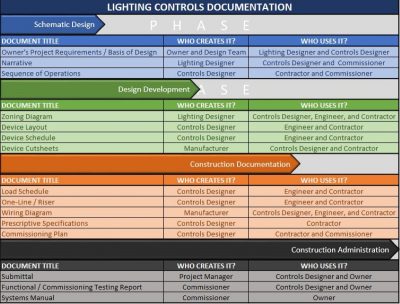
Lighting Controls Designers work with many different types of documents, some of which may be created by the designer, some by the manufacturer, and others by third parties. This paper will quickly describe each document, why it is used, and who is often responsible for creating the document. There are four design phases in which these documents are utilized…
The National Electrical Manufacturers Association (NEMA) issued a letter of support for the passage of new energy legislation being considered in the Senate this week, American Energy Innovation Act of 2020.
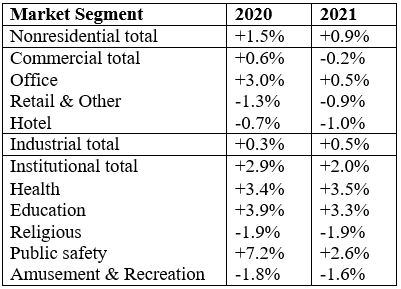
The U.S. economy grew by 2.2% in 2019 and is expected to slow to 2% in 2020, according to the most recent forecast released by the Federal Open Market Committee Meeting on December 11, 2019. The slowdown in 2019-20 is considered a byproduct of the trade war. A major contributor to the economy is construction, and the outlook for construction spending in 2020-21 is positive but lower than 2019. The AIA’s semi-annual Consensus Construction Forecast, a survey of the nation’s leading construction forecasters, is projecting 1.5% growth in nonresidential construction spending in 2020 and 1% in 2021.
“Over the past decade, I have taught many classes on networked lighting control systems (NLCs)… Over the years, I’ve seen some recurring themes in terms of questions asked by attendees, such as…”
Whether it be an office building with a smart Building Management System (BMS), a dynamic color changing bridge, or a lobby with an interactive multimedia experience, architectural lighting controls systems need integration. A lighting controls systems integrator provides a unique service for lighting controls by identifying and overseeing the devices necessary for the unique needs of the project’s design. Some projects don’t use a dedicated lighting controls integrator and some projects experience challenges without the aid of a dedicated integrator. For project success, a lighting controls designer should know when to onboard and specify an integrator.
The IES Illumination Awards provide a unique opportunity for public recognition of professionalism, ingenuity and originality in lighting design based upon the individual merit of each entry judged against specific criteria. If you have completed a project with a strong lighting design and/or lighting controls design, you can submit it in one of four program categories, including the Control Innovation Award sponsored by the Lighting Controls Association.

The Lighting Controls Association (LCA) now offers EE304: Lighting Control and the Internet of Things, as a new course in its popular Education Express program.
The National Electrical Manufacturers Association (NEMA) recently welcomed the Department of Energy (DOE) final Process Rule that modernizes its current appliance efficiency rulemaking process to conform to changes in the law, clarify ambiguities, and streamline the rulemaking process.

In a recent issue of LD+A, Gaurav Agarwal, Product Manager for Hubbell Control Solutions, talks about how the proliferation of intelligent lighting and the Internet of Things has expanded the capabilities of what lighting can do, it’s more essential now than ever to ask the client the right questions to determine the best overall solution.
In this blog post by Eaton, the company identifies and address four misconceptions about connected lighting.

In a recent issue of LD+A, consultant Rich Schuett talks about how the proliferation of intelligent lighting and the Internet of Things has broadened lighting’s value proposition, but also made targeting the right decision-maker more complex.
In this guest post by lighting designer C. Webster Marsh, he discusses alternatives to using DMX512 to control tunable-white lighting.
The North America smart lighting market reached a value of $2.4 Billion in 2018. Looking forward, the market is projected to reach a value of $7.4 Billion by 2024, registering a CAGR of 19.6% from 2019-2024.
The National Electrical Manufacturers Association (NEMA) today welcomed passage by the United States Senate in an 89-10 vote of legislation to implement the U.S.-Mexico-Canada Agreement (USMCA).
Next month, the 2016 version of ANSI/ASHRAE/IES 90.1, Energy Standard for Buildings except Low-Rise Residential Buildings, takes effect as the national energy reference standard, based on a 2018 Department of Energy (DOE) ruling. By February 2020, all states must adopt a commercial building energy code at least as stringent as the standard, or justify why they cannot comply.

From 12-1 PM ET on January 16, 2020, the Illuminating Engineering Society will host a webinar on wireless lighting controls produced by the Lighting Controls Association.
The Lighting Controls Academy has published a video version of EE102A: Occupancy and Vacancy Sensors, a free Education Express course available at YouTube.
The Lighting Controls Academy is pleased to offer Lighting Controls and the 2024 IECC, a Lighting Controls Academy course, available as a free video.

After a brief hiatus, the Lighting Controls Podcast is back with a wide-ranging conversation about where the industry stands today. In this episode, hosts C. Webster Marsh and Ron Kuszmar discuss why consistent content matters, where professionals can start learning lighting controls, and why local reps and manufacturers are often the most overlooked educational resources.

The Lighting Controls Academy is pleased to offer Lighting Controls and the 2021 IECC, a Lighting Controls Academy course, available as a free video.

The Lighting Controls Academy is pleased to offer Part 3 of Lighting Control System Design, a Lighting Controls Academy course, available as a free video.
The Lighting Controls Academy is pleased to offer Part 2 of Lighting Control System Design, a Lighting Controls Academy course, available as a free video.

The Lighting Controls Academy is pleased to offer Part 1 of Lighting Control System Design, a Lighting Controls Academy course, available as a free video.
The Lighting Controls Academy is pleased to offer Daylight-Responsive Lighting Controls, a Lighting Controls Academy course, available as a free video.
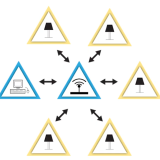
The Lighting Controls Academy is pleased to offer Networked Wireless Lighting Controls, a Lighting Controls Academy course, available as a free video.
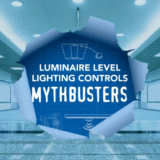
In this video by the Northwest Energy Efficiency Alliance, two lighting experts bust popular myths about luminaire-level lighting controls (LLLCs).























©2026 Lighting Controls Academy, a coalition of the National Electrical Manufacturers Association. Information published at this website has been obtained from sources believed to be reliable. Damages arising from errors, omissions or damages as from the use or misuse of this information are not the responsibility of NEMA nor its vendors. It is not the intent of this site to provide professional services.
This site rocks with Focus.