The National Electrical Manufacturers Association (NEMA) praised the U.S. House of Representatives for passing legislation to implement the U.S.-Mexico-Canada Agreement (USMCA) in a bipartisan 385-41 vote on December 19.


The National Electrical Manufacturers Association (NEMA) praised the U.S. House of Representatives for passing legislation to implement the U.S.-Mexico-Canada Agreement (USMCA) in a bipartisan 385-41 vote on December 19.
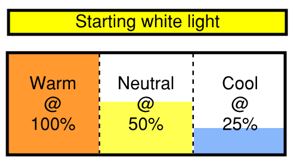
DMX512-controlled tunable dynamic white luminaires are luminaires that use DMX512 controls to change their correlated color temperature (CCT) on demand, which provides a dramatic design tool to the modern lighting designer. These luminaires are different from dynamic color changing luminaires because instead of using colored LEDs, they use a mix of white LEDs such as warm white, neutral white, and cool white. When these hues are mixed at different intensities, the overall delivered CCT of the luminaire changes. It is very important to have a robust controls system specifically designed and programmed for the control of tunable dynamic white luminaires. Any compatible controller will control a DMX512 tunable white luminaire and can adjust from one hue to another, but that’s only half the story …
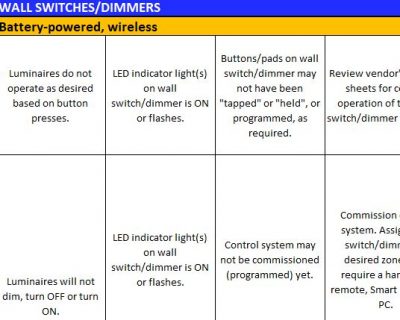
Last year, the Lighting Controls Association published the first version of a generic Troubleshooting Guide for Networked Lighting Control Systems. This guide is primarily meant to address issues that may arise with Networked Lighting Control (NLC) systems. There are plenty of things that differentiate one vendor’s NLC system from those made by other vendors. Different systems have different UIs (user interfaces), and a specific NLC system may or may not have exactly the same features or benefits as any other system. Having said that, enough similarities exist to have made the creation of this manufacturer-agnostic Troubleshooting Guide worthwhile.
The American Society of Heating, Refrigerating, and Air-Conditioning Engineers (ASHRAE) and the Illuminating Engineering Society (IES) recently published ANSI/ASHRAE/IES Standard 90.1-2019, Energy Efficiency Standard for Buildings Except Low-Rise Residential Buildings. This edition includes more than 100 changes from the 2016 version, covering administrative and enforcement, commissioning, mechanical, and lighting. For lighting, the new version adjusts interior power allowances, updates several control requirements, and introduces a simplified compliance method for office, school, and retail buildings.

We’re still finding ways to take full advantage of daylight’s benefits. It’s a challenging issue, leaving daylight in an uneasy battle with electric light for brightening our spaces – ignored or underrated in lighting designs, and poorly controlled to boot. Fortunately, this is starting to change. Along with the growing awareness of the WELL, LEED, and BREEAM building standards — which incorporate a variety of recommendations for daylight exposure and control — and acceptance of building codes that support more use of daylight harvesting, there’s a greater incentive to embrace daylight as part of the overall lighting design of a space.
The National Electrical Manufacturers Association (NEMA) published ANSI C136.58-2019, Luminaire Four-Pin Extension Module and Receptacle—Physical and Electrical Interchangeability and Testing. This new Standard provides mechanical and electrical specifications for interfacing street and area lighting with controls and sensor accessories.

The Lighting Controls Association, a council of the National Electrical Manufacturers Association (NEMA), is pleased to announce that Charles Knuffke, Systems Vice President and Evangelist for Legrand’s Wattstopper product line, has been elected the organization’s Chair for the 2020-2021 term.

C. Webster Marsh, Designer with lighting design firm Horton Lees Brogden Lighting Design, provides the final installment on his series of articles about dimming and lighting control protocols. In this last installment, he teams up with HLB’s Adam Levine to tackle digital control protocols, covering when and how to specify it, and how to overcome some of the challenges.

The American Society of Heating, Refrigerating, and Air-Conditioning Engineers (ASHRAE) recently published guides on how to design buildings that achieve net-zero energy consumption without compromising quality.
Building upon previous guides targeting deep energy savings, the first two new guides were developed in partnership with the American Institute of Architects, Illuminating Engineering Society, and U.S. Green Building Council, and target K-12 and small to medium office buildings.

On November 14, 2019, at 12 PM ET, Wattstopper, Legrand’s Charles Knuffke (vice chair and incoming chair of the Lighting Controls Association) will present a webinar hosted by the Illuminating Engineering Society, “Wireless Lighting: Security Basics (Definitions of Authentication, Encryption, and Certificates).”
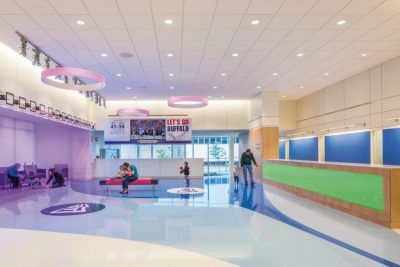
Robert J. Garra Jr., PE of CannonDesign recently contributed an article to CONSULTING-SPECIFYING ENGINEER, in which he makes a case for the importance of emphasizing controls in a quality lighting design, while laying out principles for application.
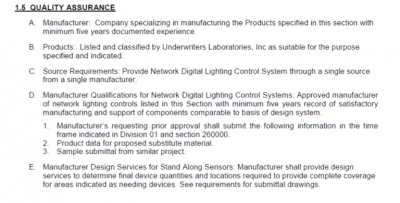
B2B research firm Accountability Information Management, Inc. (AIM) recently published a comprehensive new report, Quality is Key to Being a Player in Lighting Control Specifications. Or is it?

By early 2020, the American Society of Heating, Refrigerating, and Air-Conditioning Engineers (ASHRAE) is expected to release a new version of the BACnet building automation system protocol. BACnet Secure Connect, or BACnet/SC, brings this popular open industry standard into the Internet of Things (IoT) age by enabling the easy and secure transfer of large volumes of data.

Space utilization and indoor positioning are key non-energy benefits of networked lighting controls, writes Steve Mesh, adding that they can provide additional value in a project beyond simple energy savings.
The National Electrical Manufacturers Association (NEMA) recently published NEMA CPSP 3-2019 Cyber Hygiene Best Practices Part 2, a new white paper that identifies industry best practices and guidelines that electrical equipment and medical imaging manufacturers may consider when providing cybersecurity information to their customers.

In August 2019, the University of Oregon published a whitepaper, “The Impact of Lighting and Views in the Workplace of the Future.” The paper concludes that daylighted spaces with controlled lighting and views can improve occupant well-being, workplace productivity, and satisfaction by positively influencing various physiological and psychological processes. Lighting and views also impact property value and employee recruitment and retention, the researchers said.

“Delivering lighting controls is the work of the membership of the Lighting Controls Association. But who is responsible for commissioning them?” writes Thomas Paterson, Director of Lux Populi.
In this article, C. Webster Marsh, designer with Horton Lees Brogden, discusses the topic of interfaces between incompatible devices designed to different protocols, and how to get the best results.
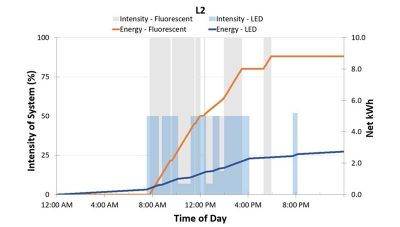
Comparison of intensity and energy consumption of the fluorescent and tunable-white LED systems on a typical day in Classroom L2.
Tunable-white LED lighting offers highly efficient general illumination combined with dimming and the ability to tune correlated color temperature (CCT) from warm- to cool-white. A strong potential application is classrooms, where teachers can set lighting/visual conditions to support classroom activities. In May 2019, the Department of Energy (DOE) published a Pacific Northwest National Laboratory (PNNL) report evaluating a trial installation of tunable-white lighting systems at three classrooms in an elementary school in Folsom, California.

The State of California has recognized the Lighting Controls Association as an authorized continuing education provider with Irvine Valley College, Electrician Trainee Program #125.
The National Electrical Manufacturers Association recently announced that Patrick Hughes has been appointed Vice President of Operations and Strategy. In this role, Hughes will oversee the Association’s industry-leading technical operations and strategic planning. Hughes previously served as Senior Director of Government Relations and Strategic Initiatives for NEMA.

This article by Michael Shulman, Principal Engineer, Lighting for UL, describes how the changing lighting control landscape presents new challenges for emergency lighting control.

As the commercial lighting industry continues its steady move towards more advanced controls and lighting solutions, for many experts, all signs point to networked lighting controls. And when it comes to truly intelligent, flexible lighting with non-energy benefits, the future could be Luminaire Level Lighting Controls (LLLCs). A subset of networked lighting controls, LLLCs include integrated sensors and control in each luminaire. To better understand this trend, Anne Curran, Senior Program Manager for the Northwest Energy Efficiency Alliance’s Luminaire Level Lighting Controls initiative, interviewed Steve Mesh, Principal at Lighting Education & Design. Here’s the transcript.
The Lighting Research Center (LRC) recently published a new DELTA report evaluating new sensor-controlled LED corridor lighting installed in a multifamily residential building in Albany, New York. The project showed significant energy savings while overall occupant response was positive.
Guest post by Steve Mesh, LC What is a “network”? One definition of “network” (from the Merriam-Webster app on my iPhone!) is … “an interconnected or interrelated chain, group, or system.” What kinds of components exist in an networked lighting control (NLC) system? That can vary from system to system. Are there basic elements that [...]

The Lighting Controls Association is pleased to announce that completion of all courses offered at the association’s online Education Express continuing education website qualifies students to earn a Certificate of Technical Knowledge in Lighting Controls.
As the commercial lighting industry continues its steady move towards more advanced controls and lighting solutions, for many experts, all signs point to networked lighting controls. And when it comes to truly intelligent, flexible lighting with non-energy benefits, the future could be Luminaire Level Lighting Controls (LLLCs). A subset of networked lighting controls, LLLCs include integrated sensors and control in each fixture. To better understand this trend, Anne Curran, Senior Program Manager for the Northwest Energy Efficiency Alliance’s Luminaire Level Lighting Controls initiative, interviewed Shaun Darragh, Senior Lighting Specialist at Lighting Design Lab. Here’s the transcript.
The Lighting Controls Association is pleased to announce that all courses in its popular Education Express online continuing education system are now downloadable as PDFs.
As the commercial lighting industry continues its steady move towards more advanced controls and lighting solutions, for many experts, all signs point to networked lighting controls. And when it comes to truly intelligent, flexible lighting with non-energy benefits, the future could be Luminaire Level Lighting Controls (LLLCs). A subset of networked lighting controls, LLLCs include integrated sensors and control in each fixture. To better understand this trend, Anne Curran, Senior Program Manager for the Northwest Energy Efficiency Alliance’s Luminaire Level Lighting Controls initiative, interviewed Chris Meek, Associate Professor of Architecture at the University of Washington. Here’s the transcript.
The Lighting Controls Association (LCA) now offers EE203: Lighting Controls and Commercial Energy Codes, Part 3: ASHRAE/IES 90.1-2016 and IECC 2018, as a new course in its popular Education Express program.

This article provides general introductory knowledge about the lighting control requirements imposed by the 2016 version of ASHRAE/IES 90.1 and the 2018 version of the IECC.

During a recent Industrial Control Systems Joint Working Group meeting representatives from the Department of Defense (DOD), International Society of Automation (ISA), and the National Electrical Manufacturers Association (NEMA) outlined a new program to address the growing risk of unprotected and under-protected building control systems in the U.S. and abroad.

Today, the National Electrical Manufacturers Association (NEMA) called on Congress to pass legislation to implement a new trade agreement with Mexico and Canada. In doing so, NEMA cited the many beneficial aspects of the U.S. Mexico Canada Agreement (USMCA) intended to replace the North American Free Trade Agreement (NAFTA).

Early in 2019, ELECTRICAL CONTRACTOR conducted a survey developed by Craig DiLouie, LC, CLCP to gauge familiarity with major lighting trends, including networked lighting controls and wireless controls. Here are some key findings.

In 2018, the California Lighting Technology Center (CLTC) published “Daylight Harvesting for Commercial Buildings Guide,” a best practices guide to designing daylight harvesting systems. While focused on compliance with California’s tough energy code, the information has broad application.

“Communication is key to ensuring compatibility between controllers and drivers,” write Elizabeth Johnson, Senior Associate, and C. Webster Marsh, Designer, of Horton Lees Brogden Lighting Design in an article about analog dimming.

Craig DiLouie, LC, CLCP recently had the opportunity to interview Michael Jouaneh, CEM, LEED AP, WELL Faculty, Manager—Sustainability and Energy Standards, Lutron Electronics Co., Inc. on the topic of how lighting and controls fit into the WELL Building Standard.

The Lighting Controls Association is proud to offer an advance look at a selection of dozens of new products that will be displayed by members at LIGHTFAIR International May 21-23, 2019 in Philadelphia.

“The reduction of overhead lighting to providing minimal background illumination, augmented by individualized lighting systems incorporating user control, delivers optimal use of facilities resources and energy, while creating a more agreeable, and arguably healthier work environment.”

Hand holding a microphone conducting a business interview or press conference
Craig DiLouie, LC, CLCP recently had the opportunity to interview David Buerer, Director of Product Management, Leviton, for an article for tED Magazine on the topic of nonresidential lighting control protocols.
The Lighting Controls Academy has published a video version of EE102A: Occupancy and Vacancy Sensors, a free Education Express course available at YouTube.
The Lighting Controls Academy is pleased to offer Lighting Controls and the 2024 IECC, a Lighting Controls Academy course, available as a free video.

After a brief hiatus, the Lighting Controls Podcast is back with a wide-ranging conversation about where the industry stands today. In this episode, hosts C. Webster Marsh and Ron Kuszmar discuss why consistent content matters, where professionals can start learning lighting controls, and why local reps and manufacturers are often the most overlooked educational resources.

The Lighting Controls Academy is pleased to offer Lighting Controls and the 2021 IECC, a Lighting Controls Academy course, available as a free video.

The Lighting Controls Academy is pleased to offer Part 3 of Lighting Control System Design, a Lighting Controls Academy course, available as a free video.

The Lighting Controls Academy is pleased to offer Part 2 of Lighting Control System Design, a Lighting Controls Academy course, available as a free video.

The Lighting Controls Academy is pleased to offer Part 1 of Lighting Control System Design, a Lighting Controls Academy course, available as a free video.
The Lighting Controls Academy is pleased to offer Daylight-Responsive Lighting Controls, a Lighting Controls Academy course, available as a free video.
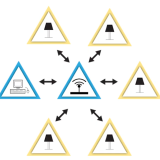
The Lighting Controls Academy is pleased to offer Networked Wireless Lighting Controls, a Lighting Controls Academy course, available as a free video.
In this video by the Northwest Energy Efficiency Alliance, two lighting experts bust popular myths about luminaire-level lighting controls (LLLCs).


























©2026 Lighting Controls Academy, a coalition of the National Electrical Manufacturers Association. Information published at this website has been obtained from sources believed to be reliable. Damages arising from errors, omissions or damages as from the use or misuse of this information are not the responsibility of NEMA nor its vendors. It is not the intent of this site to provide professional services.
This site rocks with Focus.