In this article published in LD+A, the official publication of the Illuminating Engineering Society, Manuel Lopez and Keith Graeber of the California Lighting Technology Center evaluate networked lighting control system metering and reporting capabilities.
Brienne Musselman, Education Director for the Illuminating Engineering Society, looks at seven trends that will affect professional lighting education.
The Lighting Controls Association now offers EE107B: Lighting Controls and Commercial Lighting Rebates as a new course in its popular Education Express program.
Smart home companies can help catalyze a growing opportunity by prioritizing data privacy, says a new report by CABA prepared by Harbor Research.
The Illuminating Engineering Society (IES), in collaboration with Pacific Northwest National Laboratory (PNNL), recently announced a special five-part free webinar series called “Taming Complexity.” Presented by PNNL experts and partners, this series will explore ongoing efforts to better understand and reduce the ever-growing complexity of advanced lighting systems.
In this special lighting controls edition of the Get a Grip on Lighting podcast, C. Webster Marsh and Ron Kuszmar interview Steve Mesh about the state of lighting controls.
Harmonization of international standards related to DALI lighting control continues with the publication of the updated ANSI C137.4-2021 standard in North America.
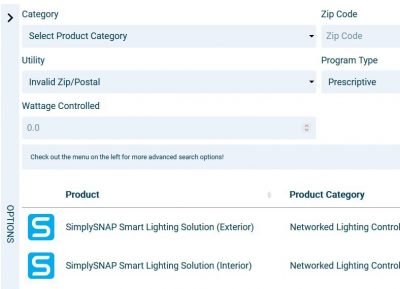
Synapse Wireless, Inc., a member of the McWane family of companies, recently announced an online search tool for locating utility rebate incentives that are available when utilizing DLC 5.0 Networked Lighting Control solutions.
As part of its educational webinar series, the Illuminating Engineering Society invites the lighting community to attend a webinar on Thursday, April 28 at 12:00 PM ET. The webinar is free to IES members and is titled, “A New Sales Pitch.” The topic: finding and communicating the value of non-energy benefits for networked lighting controls.
The commercial market lighting rebate outlook for 2022 is even stronger than 2021, with relatively stable, substantial rebates promoting adoption of energy-efficient lighting and controls.
Craig DiLouie recently had the opportunity to interview Craig Casey, Building Science Leader at Lutron Electronics, about luminaire-level lighting controls (LLLC) for an upcoming article for tED Magazine, the official publication of the NAED. Transcript follows.
The National Electrical Manufacturers Association (NEMA) has published two new standards for reporting energy data and tagging metadata.
On behalf of the U.S. Department of Energy, the Pacific Northwest National Laboratory (PNNL) will host a Zoom webinar, “Better Together: Integrating Plug Load Management Into Lighting and Building Management Systems” on March 22 at 1PM ET.
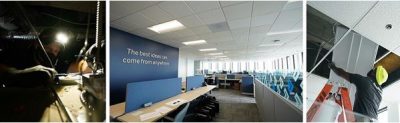
Matt Ochs, senior director of commercial business for Lutron Electronics, recently contributed an article to BUILDINGS Magazine talking about how lighting controls can support the return to the office, either fully occupied or in a hybrid office-home office model.
In 2020, the Illuminating Engineering Society (IES) published ANSI/IES LP-6-20, Lighting Control Systems: Properties, Selection, and Specification. Drawing on the Lighting Controls Association’s Education Express offering as a primary source, this 111-page Lighting Practice and American National Standard provides an excellent foundation for designing with lighting control systems.
Daintree® Networked wireless lighting controls from GE Current, a Daintree company, are now a DesignLights Consortium® (DLC®) Qualified Networked Lighting Controls Product, giving lighting designers and building owners a tested and certified full-featured lighting controls option for commercial and industrial environments.
In designing and specifying a lighting control system, part of the work involves configuring control zones to meet code requirements. This is an incredibly important step for two reasons…
According to the AIA Construction Consensus Forecast Panel of leading economic forecasters, nonresidential building construction spending is expected to expand 5.4% in 2022 and strengthen to a 6.1% expansion in 2023.
The Lighting Controls Association (LCA) now offers EE203: Lighting Controls and Energy Codes, Part 4: California Title 24, Part 6 (2019) as a new learning module in its popular Education Express program.
The National Electrical Manufacturers Association (NEMA) recently published American National Standard for Lighting Equipment—LED Drivers Robustness (ANSI C82.15-2021), which applies to hardware and microcontroller and microprocessor-based LED drivers. This American National Standard describes testing methods used to evaluate LED drivers’ robustness or their ability to withstand the specific stresses.
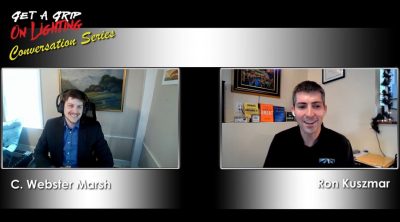
In this special controls-related “Conversation” podcast series launched by Get a Grip on Lighting and hosted by C. Webster Marsh, Marsh talks to Ron Kuszmar, who oversees Port’s Architectural and Theatrical Lighting Design & Installation departments, as well as the company’s Lighting Control Systems and Equipment Sales team.
Endeavor Business Media recently announced the launch of LightSPEC West and LightSPEC Midwest, two regional events providing lighting education and solutions for buyers and specifiers of commercial, architectural, industrial, and high-end residential and decorative lighting products, controls, and technologies. LightSPEC West will take place September 21-22, 2022 at the Magic Box @ the Reef in Los Angeles, CA and LightSPEC MidWest will take place October 4-5, 2022 at the flagship Hyatt Regency Hotel in downtown Chicago, IL.
The DesignLights Consortium (DLC) recently announced two additions to its Networked Lighting Controls (NLC) Technical Requirements, Version 5. These additions became effective December 22, 2021.
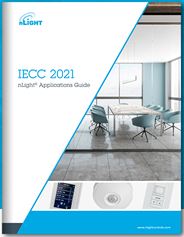
The nLight® IECC 2021 applications guide is designed to support compliance with commercial building energy codes based on the 2021 version of the International Energy Conservation Code, or IECC.
Dan Hollenkamp, COO of Toggled offers several key predictions for the future of smart lighting technology.
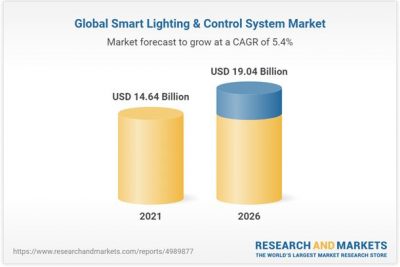
A new report by Research and Markets estimated the size of the global smart lighting and control system market at US$13.95 billion in 2020 and projected it to reach US$14.64 billion in 2021 and US$19.04 billion by 2026.
The National Electrical Manufacturers Association (NEMA) published American National Standard for Roadway and Area Lighting Equipment—Energy Measurement for a Network Lighting Control (NLC) Device with a Locking-Type Receptacle (ANSI C136.50-2021). This is a new Standard that describes methods and requirements for the measurement of energy consumption and the reporting of the consumption for a network lighting control (NLC) device in an outdoor lighting application.
In this guest post, Jared Morello, VP of Specification Sales, Legrand North America, makes the case that secure lighting networking is achievable with the right compliance and certifications.
The Department of Energy’s Integrated Lighting Campaign (ILC), sponsored by the Lighting Controls Association and other organizations, is introducing new participant and supporter categories for 2022. The categories reflect new priorities and a focus on equity and deployment, while continuing to recognize participants for exemplary projects in connected lighting systems under the original categories.
What will it take to truly change the lighting paradigm and arrive at a place where energy-efficient lighting systems are simpler to install, easier to operate, enable dynamic control, and provide clear productivity and health benefits, with less environmental impact? Explore questions like these with top lighting scientists and industry experts at DOE’s 19th annual Solid-State Lighting Workshop, cosponsored by the Illuminating Engineering Society.
In recent years, the Next Generation Lighting Systems (NGLS) program has studied the ease of installation and use of connected lighting systems and their everyday effectiveness in two Living Labs—an indoor lab at Parsons School of Design in New York City and an outdoor lab at the Corporate Research Center adjacent to the Virginia Tech Transportation Institute (VTTI) in Blacksburg, Virginia.
While networked lighting controls can deliver significant value in both energy and non-energy benefits, a challenge remains in translating these capabilities to one’s applications. What could be done with greater lighting control in my building? How is the system operated to save energy while deriving other benefits specific to my applications? How could the data be used to benefit my stakeholders? To answer this question, let’s look at three theoretical applications.
Adoption of the most robust connected lighting systems has been slower than expected. Training, education, field validation, greater interoperability, and greater standardization of utility rebate programs are strong opportunities to meet the challenges. These are some of the conclusions of the U.S. Department of Energy’s Connected Lighting Systems Stakeholders Research Study, published in September 2021.
On December 2, 2021, PG&E will host a 3.5-hour webinar, “Lighting Controls Success Stories” from 9AM to 12:30PM. In this course, attendees will see case studies demonstrating successful application of lighting controls.
Legrand has published a whitepaper, “Understanding the Essential Strategies for IoT Security,” which is available for free download.
If you missed the Illuminating Engineering Society’s conference in August, you can still catch presentations, which IES packaged in three tracks, one of which covers lighting controls.
In his Controls Column contributed to LD+A Magazine in late 2020, Wattstopper’s Charles Knuffke, chair of the Lighting Controls Association, makes the case that energy codes should recognize the non-energy benefits of lighting controls.
The DALI Alliance recently published two new Technical Guides that detail DALI specifications for wireless and IP-based connectivity.
The National Electrical Manufacturers Association (NEMA) has published NEMA CPSP 4-2021 Harmonized Cybersecurity Standards and Conformity Assessment. This document emphasizes the need for globally harmonized industry consensus around cybersecurity process Standards and conformity assessments.
Just because 0-10V dimmed luminaires are generally lower cost than digitally dimmed luminaires, it should not be assumed there will be a lower price tag on the overall project, writes C. Webster Marsh.