The DLC recently published a summary of research conducted by Skumatz Economic Research Associates, Inc. (SERA), which identified non-energy benefits (NEBs) of networked lighting controls and developed a methodology for quantifying them.

The DLC recently published a summary of research conducted by Skumatz Economic Research Associates, Inc. (SERA), which identified non-energy benefits (NEBs) of networked lighting controls and developed a methodology for quantifying them.

nLight, a brand of Acuity Brands, recently published an applications guide for California’s Title 24, Part 6 (2022) energy code.

A major contributor to the economy is construction, which overall exhibited very strong growth in 2022. Despite a strong finish to the year, however, nonresidential construction spending is expected to moderate in 2023 and slow significantly in 2024, according to the American Institute of Architects (AIA) Construction Consensus Forecast Panel made up of leading economic forecasters. The Panel forecasted that nonresidential construction spending will moderate to grow a healthy 5.8% in 2023 but then slow to less than 1% in 2024.

“Maybe you are on a rushed project with barely enough time to finalize the drawings. Perhaps you’re being onboarded years after the project began. Maybe you just have a client who won’t respond to your requests for more information. No matter the reason, a project without an Owner Project Requirements (OPR) can present one of the most common and difficult challenges modern designers face today.”
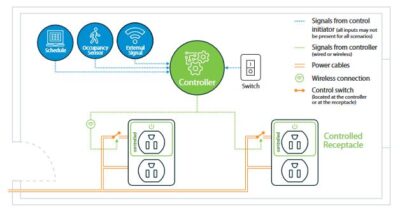
The National Renewable Energy Laboratory has published a short guide to plug load control and why it should be a common feature of commercial building energy codes.

Craig DiLouie, LC, CLCP recently had the opportunity to interview Paul Drosihn, General Manager, DALI Alliance. The topic: the recently introduced D4i global standard.

Craig DiLouie, LC, CLCP recently had the opportunity to interview Chris Udall, Senior Project Manager, Lutron Electronics about how electrical distributors can position themselves to sell networked lighting controls.

The Internet of Things: Lights, HVAC, emergency, WiFi, elevators, even refrigerators are becoming connected. In this episode of The Lighting Controls Podcast, Mike Skurla, Chief Product Officer at Radix IoT, LLC, talks about how to take advantage of this developing market–and where lighting control fits.
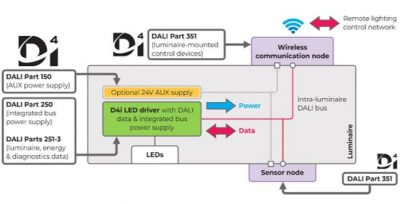
Diagram depicting D4i implementation in an outdoor luminaire with two nodes, one for sensing and the other for wireless communication. Image courtesy of DALI Alliance.
The DALI Alliance recently extended DALI-2, which standardizes interoperability and control of LED drivers and sensors, with a version that more finely addresses the needs of the Internet of Things, which calls for individual device addressability, connectivity, and two-way data exchange.

The Lighting Controls Association now offers EE203: Lighting Controls and Energy Codes: California Title 24, Part 6 as a new course in its popular Education Express program.

Craig DiLouie, LC, CLCP recently had the opportunity to interview Martin Mercier, Marketing Manager, IOT/Connected Systems, Cooper Lighting Solutions. The topic: how electrical distributors can position and sell networked lighting controls.
In this episode of The Lighting Controls Podcast co-produced by the Lighting Controls Association and NAILD and sponsored by Toggled IQ, Gary Meshberg, LC, CLCP, LEED-AP, vice chair of the LCA and director of industry and market engagement for Digital Lumens/ENCELIUM, explains how to overcome reluctance to adopt advanced lighting controls.
On January 1, 2023, the 2022 version of California’s energy code—Title 24, Part 6 of the Building Standards Code—takes effect, superseding the previous 2019 version. In terms of lighting controls, the numerous changes include various clarifications and tuning along with two major provisions requiring occupant-sensing in offices larger than 250 sq.ft. and demand-responsive lighting controls. Designers and specifiers need to understand these changes before they begin working on code-covered new construction and alteration projects that will go out for permit in California in 2023.

The Zhaga Consortium is launching the global Zhaga Smart City Sensor Awards to address the needs of cities that have installed Zhaga-D4i certified streetlights.

On Thursday, October 20, 2022 at 12:00 PM ET, the Illuminating Engineering Society will present a webinar providing an overview of the concepts in ANSI/IES LP-16: Documenting Control Intent Narratives and Sequences of Operations.

The new incarnation of the Commercial Buildings Tax Deduction offers a strong incentive to stretching energy efficiency in new buildings and modernizing existing buildings. In new buildings, it incentivizes more detailed design and the most advanced control options. In existing buildings, it incentivizes a wide range of lighting and advanced control options that, when coupled with available utility rebates, can substantially reduce initial cost that remains the largest inhibitor to investment in reducing operating costs via energy efficiency.
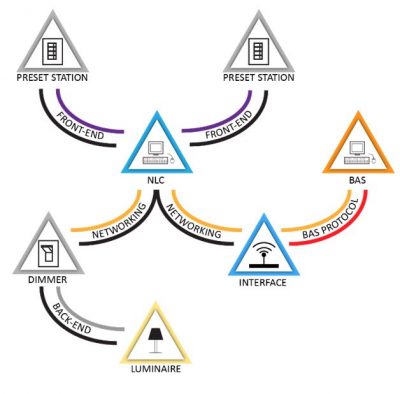
Here’s the scenario: you are a lighting controls designer working on a project with a BAS that uses BACnet…

In this episode of Get a Grip on Lighting’s Conversation series about lighting controls, hosts C. Webster Marsh and Ron Kuszmar talk to the Lighting Controls Association’s Craig DiLouie about networked controls, sensors, controls education and training, and writing, among other topics.
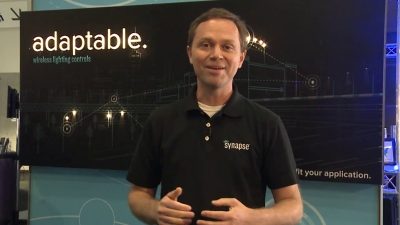
Craig DiLouie, LC, CLCP recently enjoyed the opportunity to interview Jamie Britnell, Director of Product Marketing, Synapse Wireless for an article about how electrical distributors can sell networked lighting controls to LED upgrade customers, increasing revenues and service value.

The Lighting Controls Association is proud to announce it is now a contributor to LEDs Magazine, a preeminent publication serving the lighting industry. In our first contribution, Craig DiLouie, LC, CLCP authored an article about three hypothetical facility owners/managers using networked lighting controls to achieve a wide range of benefits over the course of a year.

The US Department of Energy (DOE) has opened the Prototype Phase of its L-Prize competition, which seeks to boost innovation in advanced LED luminaires and control systems for use in commercial and institutional buildings. The DALI Alliance, the Zhaga Consortium and PNNL will present a webinar on September 15, 2022, to discuss the technical requirements of the Prototype Phase and explain the opportunities for entrants when using standards-based connectivity technologies including Zhaga Book 20 and D4i data and control.

The DesignLights Consortium (DLC) recently announced the first products added to its LUNA Qualified Products List (QPL) after being tested and determined to meet the new LUNA Version 1.0 Technical Requirements for outdoor LED luminaires.

OPR: What are the Owner’s Project Requirements? That’s what Julia Gordon, a lighting designer with 25+ years of experience, posits on every project.

Next year, the 2019 version of ANSI/ASHRAE/IES 90.1, Energy Standard for Buildings except Low-Rise Residential Buildings, takes effect as the national energy reference standard. This is based on a July 2021 Department of Energy (DOE) ruling that determined the standard saved more energy than the preceding 2016 version. By July 28, 2023, all states must adopt a commercial building energy code at least as stringent as the standard, or justify why they cannot comply.

Despite the potential benefits and variety of conditions that tunable lighting systems can provide, research documenting occupant preference in healthcare settings is sparse. Recently, researchers at PNNL and Georgia Institute of Technology’s SimTigrate Design Lab partnered on a study of patient preference for tunable light.

LightNOW’s David Shiller recently interviewed John Arthur Wilson, a lighting control and utility rebate consultant, about his 2021 market research into wireless lighting controls.
Join the Seattle-based Smart Buildings Center for the free 2022 Smart Buildings Exchange (SBX) to be held virtually and in-person August 22-24, 2022.

In an article recently published in SMART BUILDINGS TECHNOLOGY, LightSPEC Director Clifton Stanley Lemon talks to industry experts about intelligent buildings are the future, while taking a look at current issues with integrating smart building controls.

Many designers, manufacturers, and contractors are resisting change, Marsh notes in his column, and it appears as though we are headed towards a third paradigm shift that will sustain those who adapt and eliminate those who don’t.

In this episode of Get a Grip on Lighting’s Conversation series about lighting controls hosted by C. Webster Marsh and Ron Kuszmar, they talk to lighting designer Javid Butler, LC, CEM, CMVP about his background in theatrical lighting before transitioning into architecture lighting, and the technological evolution of lighting controls into the digital age.

As lighting controls become more sophisticated in application and capabilities, properly documenting the system’s intent and settings becomes critical. One of the most important documents is the control narrative, including a detailed sequence of operations. Though required by commercial building energy codes as documentation for many new construction and major renovation projects, aside from the Lighting Controls Association, manufacturers, and a few other sources, there are few resources providing guidance about how to write them. Enter the Illuminating Engineering Society (IES), which took on the challenge by publishing ANSI/IES LP-16-22, Documenting Control Intent Narratives and Sequences of Operations in June 2022.

The Lighting Controls Association now offers EE302, Part 4: Luminaire-Level Lighting Controls (LLLC) as a new course in its popular Education Express program.
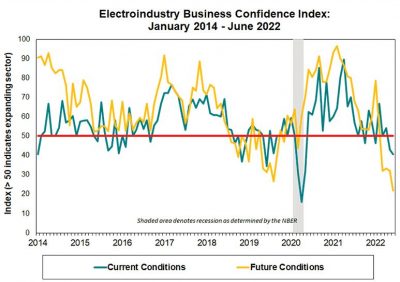
Current electroindustry business conditions edged lower in June 2022, with the National Electrical Manufacturers Association’s (NEMA) Electroindustry Business Confidence Index (EBCI) score staying below the no-change threshold level of 50 for the second consecutive month with a score of 40.6.

The Illuminating Engineering Society (IES) recently introduced four new standards: standardizing iterations of lighting controls intent, navigating near-field photometry, the importance of UV lighting, and promoting a balanced outdoor environment.

In senior care centers, tunable LED lighting system retrofits can save energy, reduce operating costs, and improve quality of life for occupants when compared to outdated fluorescent systems that are still used in many facilities nationwide. A recent study suggests that LED tunable lighting system retrofits can offer energy savings and reduced costs, along with the possibility of improved quality of life for residents.

Luminaire-level lighting controls (LLLC), also called embedded controls, are lighting control systems in which sensors and controllers are installed within luminaires to enable autonomous, individual luminaire control. By making each luminaire a control point, control is highly flexible, responsive, and therefore generally more energy-saving. Serving as a preview for an upcoming Education Express course, this article describes LLLC technology, system types, advantages and disadvantages, studies characterizing energy savings and cost, and what’s familiar and distinctive in regards to design and installation.
Modern lighting control systems require a lot more components than they used to. As a result, a lighting controls designer’s job has come to include the documentation required to fully specify a system, which includes well-defined devices, narratives, and sequences. This column by C. Webster Marsh is the first part of a multi-part series that hopes to identify how lighting controls interact with each other and how best to implement a documentation style that is shared with current industry trends.
The DesignLights Consortium (DLC) and the Lighting Controls Association recently announced an agreement to collaborate in the offering of online courses that advance students’ knowledge of networked lighting control (NLC) technology and applications.

In this article published in LD+A, Telensa’s Cindy Brewbaker lays out a seven-point case for smart street lighting.

Moderated by Michael Colligan, this episode of Get a Grip on Lighting pits two lighting thinkers in a spirited debate over whether 0-10V or digital lighting control has the edge in projects subject to value engineering.
The Lighting Controls Academy has published a video version of EE102A: Occupancy and Vacancy Sensors, a free Education Express course available at YouTube.
The Lighting Controls Academy is pleased to offer Lighting Controls and the 2024 IECC, a Lighting Controls Academy course, available as a free video.

After a brief hiatus, the Lighting Controls Podcast is back with a wide-ranging conversation about where the industry stands today. In this episode, hosts C. Webster Marsh and Ron Kuszmar discuss why consistent content matters, where professionals can start learning lighting controls, and why local reps and manufacturers are often the most overlooked educational resources.

The Lighting Controls Academy is pleased to offer Lighting Controls and the 2021 IECC, a Lighting Controls Academy course, available as a free video.

The Lighting Controls Academy is pleased to offer Part 3 of Lighting Control System Design, a Lighting Controls Academy course, available as a free video.

The Lighting Controls Academy is pleased to offer Part 2 of Lighting Control System Design, a Lighting Controls Academy course, available as a free video.

The Lighting Controls Academy is pleased to offer Part 1 of Lighting Control System Design, a Lighting Controls Academy course, available as a free video.
The Lighting Controls Academy is pleased to offer Daylight-Responsive Lighting Controls, a Lighting Controls Academy course, available as a free video.
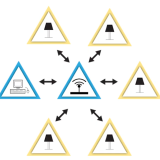
The Lighting Controls Academy is pleased to offer Networked Wireless Lighting Controls, a Lighting Controls Academy course, available as a free video.
In this video by the Northwest Energy Efficiency Alliance, two lighting experts bust popular myths about luminaire-level lighting controls (LLLCs).
























©2026 Lighting Controls Academy, a coalition of the National Electrical Manufacturers Association. Information published at this website has been obtained from sources believed to be reliable. Damages arising from errors, omissions or damages as from the use or misuse of this information are not the responsibility of NEMA nor its vendors. It is not the intent of this site to provide professional services.
This site rocks with Focus.