Craig DiLouie, LC, CLCP recently had the opportunity to interview Jonathan Cartrette, Systems Architect, Wattstopper/Legrand for an article that will be published in 2019 for ELECTRICAL CONTRACTOR. The topic? Lighting and cybersecurity.


Craig DiLouie, LC, CLCP recently had the opportunity to interview Jonathan Cartrette, Systems Architect, Wattstopper/Legrand for an article that will be published in 2019 for ELECTRICAL CONTRACTOR. The topic? Lighting and cybersecurity.
In September, California passed SB-327, a cybersecurity law that will affect manufacturers of Internet of Things (IoT) and operational technology (OT) devices.

This article at Eaton’s THE SOURCE website provides an insightful look at how connected lighting can facilitate space optimization.

In August 2018, the DesignLights Consortium (DLC) released Energy Savings Potential of DLC Commercial Lighting and Networked Lighting Controls, which projects energy savings for LED commercial lighting and networked lighting controls. The report makes a case that to continue getting big energy savings from lighting for another decade, utility rebate program administrators should transition to supporting LED luminaires and networked controls.

This educational video, produced by the Lighting Controls Association at the 2018 LIGHTFAIR event, introduces the building industry to Lutron Electronics’ Enterprise Vue lighting control system.

In this guest post, LCA contributor Steve Mesh describes the “non-energy benefits” of connected lighting, which can add extraordinary value far beyond energy savings.

Craig DiLouie, LC, CLCP recently interviewed Scott Ziegenfus, CEM, CLEP, CDSM, GGP, GPCP, LEED AP, Architect, Systems Manager, Government and Industry Relations at Hubbell Lighting, for an article for the January 2019 of ELECTRICAL CONTRACTOR, the official publication of NECA. The topic: why and how lighting professionals should talk to IT departments.

“As the lighting industry attempts to morph from its conventional role of illumination and become more of a provider of smart networks that collect data through chips and sensors embedded in the lighting infrastructure, it should focus its sales efforts on IT groups rather than on the customary facilities departments,” Mark Halper writes for LEDs Magazine.

“While the majority of installations today are distributed high voltage (between 110V and 347V), the emergence of solid-state lighting technology has brought into question whether this is the most practical and efficient way to feed future lighting systems … In general illumination application, there are currently two core approaches to operating luminaires directly from low voltage DC power. Emerge Alliance 24VDC distributed, and Power over Ethernet (PoE). The two approaches employ distinctly different control approaches.”

The Internet of Things at a glance, focusing on the lighting and control system. Data from sensors in a networked lighting system flows to a server or the Cloud, where it is analyzed at a workstation that in turn is used for lighting management. Data can also be shared with other building systems and third-party software. The shown lighting and control system is readily achievable today. What happens beyond to create a single smart building that harvests and translates data into meaningful action is developing. Image courtesy of Cree.
Networked control and connected luminaire manufacturers are now promoting their products as “IoT enabled.” This means when the IoT does arrive, the lighting system will stand ready to play a part in it without significant additional cost. The converse may also be regarded as true, which is without connected lighting, any new LED lighting may instantly become obsolete after installation.

In this guest post, Paul Rudalavage, Synergy Electrical Sales summarizes five key areas to understand and explore when purchasing a lighting control system.
“If you are a regular reader of Lighting Controls Association blog posts, then you know that networked lighting control systems (NLCs) are really computer networks – they just happen to control luminaires, occupancy sensors, photosensors and light switches. The paradigm shift for lighting control systems has occurred at lightning-fast speed in recent years … However, once you decide to piggyback onto an existing IT network, you are in the domain of the IT staff who works for the building’s owner.”
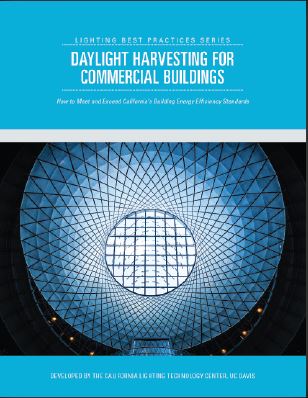
The California Lighting Technology Center recently announced publication of the Daylight Harvesting for Commercial Buildings Guide, which provides guidance towards meeting and exceeding California’s Building Energy Efficiency Standards for daylight harvesting.
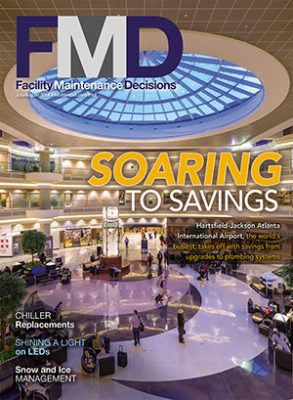
FACILITIES MAINTENANCE DECISIONS recently ran an article contributed by the Lighting Controls Association on how to apply lighting controls to existing buildings.

Image courtesy of Lutron Electronics.
Software plays a central role in commissioning, operating, and analyzing data collected by networked lighting control systems. As connected lighting becomes more popular, manufacturers continue to make their software simpler, more robust, more portable, and require less training. Software is a major touch point regarding the lighting control system serving either as a platform or an integral part of implementing the Internet of Things in commercial buildings.

“I recently wrote about how lighting energy allowances under current codes are now approaching a practical minimum, thanks to significant improvements in source efficacy, optical efficiency, and controls that automatically extinguish lighting when it is not needed.”
The TALQ Consortium reveals in a White Paper recently published a whitepaper detailing insights into its global interface standard and certification scheme for managing smart city applications including outdoor lighting networks.

Craig DiLouie, LC, CLCP recently interviewed Gary Trott, VP of Intelligent Lighting and IoT Platform, Cree for an article for the October issue of tED Magazine, the official publication of the NAED. The topic: connected lighting’s potential role in the Internet of Things.
On July 26, 2018 the International Code Council published the 2018 version of the International Energy Conservation Code (IECC), which has been updated every three years since 2000. This 2018 version reduces lighting power allowances, broadens mandatory controls requirements, and issues clarifications.
Craig DiLouie, LC, CLCP recently interviewed Michael Lunn, Director, Product Marketing, Eaton Corporation, on the topic of plug load control.

To simplify the process of gaining certificates, Education Express now offers two. One for AIA LU/HSW credit, and one for all others on the same PDF certificate. We took this step to simplify the certificates, reduce student paperwork, and make a cleaner appearance on the My Classroom page.

Craig DiLouie, LC, CLCP recently interviewed Jamie Britnell, Director of Product Marketing – Lighting, Synapse Wireless for an article about the Internet of Things, which will be published in the October issue of tED Magazine.
With the right combination of dimmer and solid-state driver for LED products, dimming performance can achieve excellent results from 100% all the way to dark, smoothly and predictably, says Kevin Willmorth in his latest exclusive contribution. However, when the combination is wrong, many undesirable effects may occur, he points out. Investigating the reasons for these issues requires a basic understanding of where issues can arise.
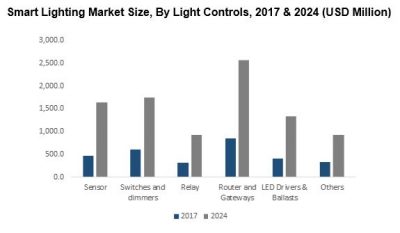
According to a recently released research report by the market research and strategy consulting firm, Global Market Insights, Inc, the Smart Lighting Market will exceed US $24 billion by 2024.

The National Electrical Manufacturers Association (NEMA) published NEMA IOTP 1-2018 Standby Power of Connected Devices and the Internet of Things. This new white paper explores the conflict between limitations on what is commonly referred to as standby power, and the potential services and benefits of connected devices in the Internet of Things (IoT) and Industrial Internet of Things (IIoT).
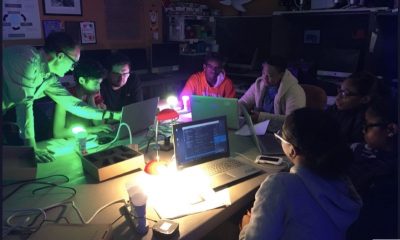
Stacks+Joules is a non-profit workforce training program designed to prepare high school seniors for jobs in the building automation field. This article by LCA Education Director Craig DiLouie describes the program and the role LCA’s Education Express plays in it.
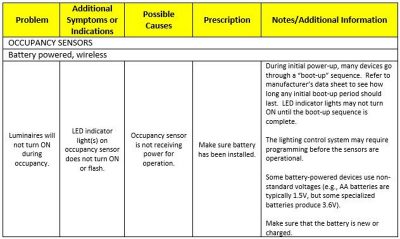
This guest post by Steve Mesh introduces the new Lighting Controls Association troubleshooting guide for networked lighting control systems.

Eaton’s The Lighting Resource recently published an article about dimming LED lamps and luminaires.

The IoT-Ready Alliance™ recently introduced its first specification, The IoT-Ready™ Interface Specification V1.0. The Specification defines a socket that allows any type of Internet of Things (IoT) sensor or control module to connect seamlessly to a luminaire or other building system.

Hubbell’s Summer Albergotti and Marissa Keisler contributed an article to Facilities.net, “Human-Centric Lighting for Schools, Hospitals, and Offices.” The article describes how color tuning enables lighting systems to better serve the needs of users and spaces.
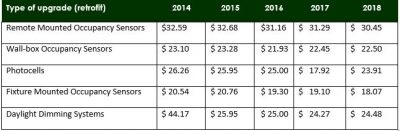
Table 2. Popular lighting control rebates. Source: BriteSwitch North American Rebate and Incentive Database, February 2018.
The most popular lighting control rebates continue to be occupancy sensors, light sensors, and daylight dimming systems. The average rebate for controls is fairly high when one considers their cost, positioning them as an attractive add-on to a retrofit. In some cases, such as high-bay lighting, the rebate can almost completely cover the cost of adding a luminaire-mounted occupancy sensor.

“Coexistence,” “interchangeability,” and “standby power” are samples of some of the terms featured in Lighting Systems Terms and Definitions, a new publication by the National Electrical Manufacturers Association.

This article produced by Craig DiLouie, LC, CLCP for the May 2018 issue of tED Magazine presents a roundtable by lighting experts talking about the impact of connected lighting.

Several Education Express online courses offered by the Lighting Controls Association are now required as prerequisites for National Lighting Contractors Association of America (NLCAA) certification and training of Acceptance Test Technicians in the State of California.
California has been a historical leader in terms of state energy codes. California’s Title 24 has led the way by restricting allowable LPDs (Lighting Power Density) as well as mandating specific types of lighting controls. This article by Steve Mesh introduces the Title 24 energy code and its lighting control requirements.

Networked lighting control is an important emerging trend in lighting control. However, these systems may be more complex than traditional solutions. In response, the Lighting Controls Association has created a generic troubleshooting guide for networked lighting control systems, currently available free as a V1.0 beta version.
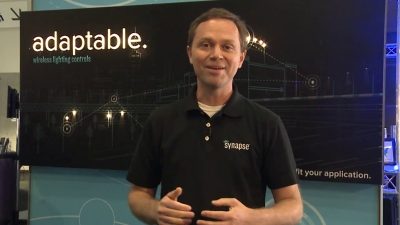
Craig DiLouie, LC, CLCP, recently had the pleasure of interviewing Jamie Britnell, Senior Product Manager, Synapse Wireless, Inc. about lighting control software for articles for ELECTRICAL CONTRACTOR and tED. Click to read the interview.
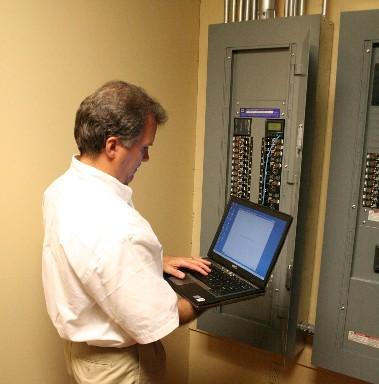
Image courtesy of Schneider Electric
The Lighting Controls Association (LCA), a council of the National Electrical Manufacturers Association (NEMA), has re-released EE110: Commissioning and Lighting Controls, a course in its popular Education Express program.
If you’re installing a lighting control system in 2018, you have to be concerned about cyber security. Why? Very simply – because many current lighting control systems are networked.
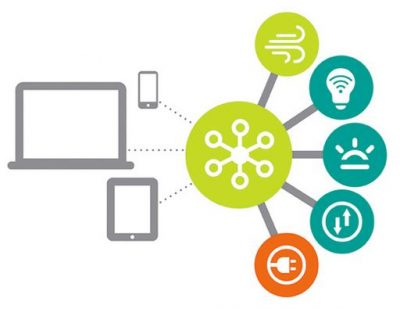
Image courtesy of Audacy Wireless Lighting Control
The Lighting Controls Association (LCA) now offers EE301: Wireless Lighting Controls, as a new course in its popular Education Express program.
The Lighting Controls Academy has published a video version of EE102A: Occupancy and Vacancy Sensors, a free Education Express course available at YouTube.
The Lighting Controls Academy is pleased to offer Lighting Controls and the 2024 IECC, a Lighting Controls Academy course, available as a free video.

After a brief hiatus, the Lighting Controls Podcast is back with a wide-ranging conversation about where the industry stands today. In this episode, hosts C. Webster Marsh and Ron Kuszmar discuss why consistent content matters, where professionals can start learning lighting controls, and why local reps and manufacturers are often the most overlooked educational resources.

The Lighting Controls Academy is pleased to offer Lighting Controls and the 2021 IECC, a Lighting Controls Academy course, available as a free video.

The Lighting Controls Academy is pleased to offer Part 3 of Lighting Control System Design, a Lighting Controls Academy course, available as a free video.

The Lighting Controls Academy is pleased to offer Part 2 of Lighting Control System Design, a Lighting Controls Academy course, available as a free video.

The Lighting Controls Academy is pleased to offer Part 1 of Lighting Control System Design, a Lighting Controls Academy course, available as a free video.
The Lighting Controls Academy is pleased to offer Daylight-Responsive Lighting Controls, a Lighting Controls Academy course, available as a free video.
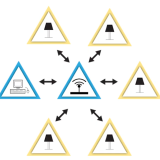
The Lighting Controls Academy is pleased to offer Networked Wireless Lighting Controls, a Lighting Controls Academy course, available as a free video.
In this video by the Northwest Energy Efficiency Alliance, two lighting experts bust popular myths about luminaire-level lighting controls (LLLCs).

























©2026 Lighting Controls Academy, a coalition of the National Electrical Manufacturers Association. Information published at this website has been obtained from sources believed to be reliable. Damages arising from errors, omissions or damages as from the use or misuse of this information are not the responsibility of NEMA nor its vendors. It is not the intent of this site to provide professional services.
This site rocks with Focus.