The Lighting Controls Academy is pleased to offer Part 3 of Lighting Control System Design, a Lighting Controls Academy course, available as a free video.


The Lighting Controls Academy is pleased to offer Part 3 of Lighting Control System Design, a Lighting Controls Academy course, available as a free video.

The Lighting Controls Academy is pleased to offer Part 2 of Lighting Control System Design, a Lighting Controls Academy course, available as a free video.
The Lighting Controls Academy is pleased to offer Part 1 of Lighting Control System Design, a Lighting Controls Academy course, available as a free video.

In this extraordinary guest post, Cooper Lighting Solutions’ Martin Mercier describes the codes and options that make up emergency lighting and the role for lighting control systems, including wireless.

As lighting control systems become more sophisticated to satisfy increasingly stringent energy codes and evolving project demands, clear documentation has become even more essential. To address this need, the Lighting Controls Academy developed Design Express.

The primary legacy source for general lighting in most school spaces is fluorescent. These can be replaced by LED products for 20 to 60 percent energy savings, greater longevity, controllability, and improved quality of light. A lighting upgrade is the ideal time to install advanced lighting controls to enhance energy savings and flexibility in light levels and color.

In the world of building projects, the Control Intent Narrative (CIN) and Sequence of Operations (SOO) have long been essential and elusive. They define how a lighting control system will function, but too often they arrive late in the process (or not at all), are inconsistent from one project to the next, and are misaligned with energy codes or industry standards. The Lighting Controls Academy set out to change this dynamic with a new resource: Design Express.

In this episode of The Lighting Controls Podcast sponsored by MaxLite, hosts C. Webster Marsh and Ron Kuzmar interview Gary Meshberg, Chair of the Lighting Controls Academy, and Legrand’s Harold Jepsen, Vice Chair of the NEMA Lighting Controls Technical Section about the evolving world of lighting controls and a groundbreaking new Control Intent Narrative/Sequence of Operations Tool offered by the Lighting Controls Academy.

In this episode of the Lighting Controls Podcast produced by NAILD and the Lighting Controls Association, hosts Ron Kuszmar and C. Webster Marsh talk to Bryan Lussier, MFA, LC, CLCP, Lead Controls Specialist in Specification Sales for Apex Lighting Solutions, about factors to consider for lighting design firms interested in developing their own lighting controls teams.

Whether you use traditional lighting control devices or newer systems such as networked lighting controls (NLCs), you have to communicate and document how you want those devices or systems to behave. This documentation should include a Control Intent Narrative and Sequence of Operations.

Based on EE105: Lighting Control System Design, a new course in the Lighting Controls Association’s Education Express program, this article provides detailed information about designing an effective lighting control solution.

In Part 1 of this Lighting Controls System Design series, we learned about key documentation including the Content Intent Narrative (CIN), Sequence of Operations (SOO), and Owner Project Requirements (OPR). The next step in design development is to turn these requirements and conceptual design into a realized design

In Part 3 of this series on how to design a lighting control system, we will discuss installation and post-occupancy. You will learn about bidding, responding to questions from installers, reviewing submittals and defending your design, following-through with the installation of the equipment, functional testing, training essential staff, and ultimately ensuring the owner is satisfied.

The Lighting Controls Association has published a comprehensive update to its popular Education Express course EE105: Lighting Control System Design.

As LED lighting adoption increases, organizations focused on saving energy are looking more and more to lighting controls as the next frontier for maximizing energy savings and decarbonization. Selecting Lighting Control Systems, a publication by PNNL for the DOE, sheds light on the process of designing solutions that both align with project objectives and are clearly documented. PNNL developed this publication in response to research finding that success with lighting controls can maximized by adhering to industry best practices. The result is a straightforward 20-page guide, with additional resources listed ranging from IES lighting practices ANSI/IES-LP-6 and ANSI/IES-LP-16 to the Lighting Controls Association.

It’s an LED world now; traditional sources are just living in it. The next frontier of energy savings lies in bringing the lighting controls revolution to mainstream adoption in existing buildings via best practices.

Craig DiLouie, LC, CLCP recently had the pleasure of interviewing Brendon Van Campen, Senior Sales Director, Lutron Electronics, for an article about lighting control trends for an upcoming article to be published in tED Magazine, the official publication of the NAED. Here’s the transcript.

The Pacific Northwest National Laboratory (PNNL) has published a concise and informative guide to help designers and project managers select the most cost-effective and energy-efficient lighting and control systems, including lessons learned from evaluations conducted in federal buildings.

Craig DiLouie, LC, CLCP recently had the pleasure of interviewing Trevor Palmer, President, Acuity Brands Lighting and Controls, about indoor lighting trends for an upcoming article in tED Magazine, the official publication of the NAED. Here’s the transcript.

Hosted by Steve Roe, Vice President of Controls at Acuity Brands, Roe with Controls is a monthly series of videos in which Steve discusses a new topic that impacts the lighting and lighting controls industry and then shares insights and thoughts based on his experience.

If you missed LEDucation 2024 or want to revisit some of the presentations, you’re in luck–LEDucation offers an archive at its website.

In this episode of The Lighting Controls Podcast presented by the Lighting Controls Association and NAILD–with this episode sponsored by mwConnect (formerly McWong International)–Shoshanna Segal, principal of Hartranft Lighting Design, talks about how a clearly written intent is the way to achieve better lighting control.

In this episode of The Lighting Controls Podcast co-produced by the Lighting Controls Association and NAILD, Daniel Salinas, President/Lighting Systems Designer for Salinas Lighting Consult, Inc., describes the rewards and challenges of renovation and retrofit projects.

Says White: “The controls people out there – they are worth their weight in gold, times ten!”

Everywhere, we see signs the LED revolution has won. An argument can be made, however, that this mature lighting technology is simply entering its next phase of market opportunity. Call it LED Revolution 2.0.

Who’s responsible for the lighting controls on a project? Who’s qualified? Who’s certified? In this extraordinary conversation at The Lighting Controls Podcast sponsored by the Lighting Controls Association and NAILD, hosts Webster and Ron talk to Darren Lapsley about communications between teams, education, the future of lighting controls, and much more.

The 2016 Paris Agreement called for its nearly 200 signatories to join in limiting global warming to an increase of 1.5 degrees Celsius above pre-industrial levels. This would require carbon emissions to be reduced by about half by 2030 and reach net zero by 2050. To reach this goal, the rate of retrofits in the Global North will need to triple from barely 1 percent to at least 3 percent of stock each year, according to Retrofitting Buildings to be Future-Fit, a November 2022 report by commercial real estate services firm Jones Lang LaSalle (JLL).

Check out these excellent publications covering lighting controls by the Illuminating Engineering Society.

BetterBricks recently sat down for an interview with industry veteran James R. Benya, PE, FIES, FIALD, Principal Illuminating Engineer and Lighting Designer. In this insightful conversation, Benya shares tips and experiences specifying luminaire-level lighting controls, including pros and cons.

Image courtesy of Signify North America Corporation.
By Steve Mesh This article on emergency lighting and controls was very much a collaborative effort. Many experts in the field—including Rick Miller, Craig DiLouie, and several manufacturers—provided extremely valuable input in reviewing and fact-checking the content. Egress and emergency lighting are critical elements of building design. During periods of occupancy, a clear, unobstructed path [...]

In this episode of The Lighting Controls Podcast co-produced by the Lighting Controls Association and NAILD, lighting controls and integration designer Ben Sullivan of CM Kling + Associates describes taking ownership of the design and implementation of controls, including: identifying the right devices, coordinating mounting locations, designing integration points, following up with occupants, and avoiding the finger-pointing game.
Southern California Edison has announced a series of free webinars to help you take control of your lighting system or project.

“Maybe you are on a rushed project with barely enough time to finalize the drawings. Perhaps you’re being onboarded years after the project began. Maybe you just have a client who won’t respond to your requests for more information. No matter the reason, a project without an Owner Project Requirements (OPR) can present one of the most common and difficult challenges modern designers face today.”

On Thursday, October 20, 2022 at 12:00 PM ET, the Illuminating Engineering Society will present a webinar providing an overview of the concepts in ANSI/IES LP-16: Documenting Control Intent Narratives and Sequences of Operations.

OPR: What are the Owner’s Project Requirements? That’s what Julia Gordon, a lighting designer with 25+ years of experience, posits on every project.

Many designers, manufacturers, and contractors are resisting change, Marsh notes in his column, and it appears as though we are headed towards a third paradigm shift that will sustain those who adapt and eliminate those who don’t.

As lighting controls become more sophisticated in application and capabilities, properly documenting the system’s intent and settings becomes critical. One of the most important documents is the control narrative, including a detailed sequence of operations. Though required by commercial building energy codes as documentation for many new construction and major renovation projects, aside from the Lighting Controls Association, manufacturers, and a few other sources, there are few resources providing guidance about how to write them. Enter the Illuminating Engineering Society (IES), which took on the challenge by publishing ANSI/IES LP-16-22, Documenting Control Intent Narratives and Sequences of Operations in June 2022.

The Illuminating Engineering Society (IES) recently introduced four new standards: standardizing iterations of lighting controls intent, navigating near-field photometry, the importance of UV lighting, and promoting a balanced outdoor environment.

Luminaire-level lighting controls (LLLC), also called embedded controls, are lighting control systems in which sensors and controllers are installed within luminaires to enable autonomous, individual luminaire control. By making each luminaire a control point, control is highly flexible, responsive, and therefore generally more energy-saving. Serving as a preview for an upcoming Education Express course, this article describes LLLC technology, system types, advantages and disadvantages, studies characterizing energy savings and cost, and what’s familiar and distinctive in regards to design and installation.
Modern lighting control systems require a lot more components than they used to. As a result, a lighting controls designer’s job has come to include the documentation required to fully specify a system, which includes well-defined devices, narratives, and sequences. This column by C. Webster Marsh is the first part of a multi-part series that hopes to identify how lighting controls interact with each other and how best to implement a documentation style that is shared with current industry trends.
The Lighting Controls Academy has published a video version of EE102A: Occupancy and Vacancy Sensors, a free Education Express course available at YouTube.
The Lighting Controls Academy is pleased to offer Lighting Controls and the 2024 IECC, a Lighting Controls Academy course, available as a free video.

After a brief hiatus, the Lighting Controls Podcast is back with a wide-ranging conversation about where the industry stands today. In this episode, hosts C. Webster Marsh and Ron Kuszmar discuss why consistent content matters, where professionals can start learning lighting controls, and why local reps and manufacturers are often the most overlooked educational resources.

The Lighting Controls Academy is pleased to offer Lighting Controls and the 2021 IECC, a Lighting Controls Academy course, available as a free video.

The Lighting Controls Academy is pleased to offer Part 3 of Lighting Control System Design, a Lighting Controls Academy course, available as a free video.

The Lighting Controls Academy is pleased to offer Part 2 of Lighting Control System Design, a Lighting Controls Academy course, available as a free video.

The Lighting Controls Academy is pleased to offer Part 1 of Lighting Control System Design, a Lighting Controls Academy course, available as a free video.
The Lighting Controls Academy is pleased to offer Daylight-Responsive Lighting Controls, a Lighting Controls Academy course, available as a free video.
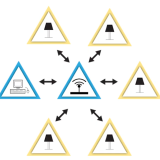
The Lighting Controls Academy is pleased to offer Networked Wireless Lighting Controls, a Lighting Controls Academy course, available as a free video.
In this video by the Northwest Energy Efficiency Alliance, two lighting experts bust popular myths about luminaire-level lighting controls (LLLCs).


























©2026 Lighting Controls Academy, a coalition of the National Electrical Manufacturers Association. Information published at this website has been obtained from sources believed to be reliable. Damages arising from errors, omissions or damages as from the use or misuse of this information are not the responsibility of NEMA nor its vendors. It is not the intent of this site to provide professional services.
This site rocks with Focus.