The Lighting Controls Association (LCA) has updated EE103: Dimming Controls, Section 1 Part 2: Dimming Controls and Systems, a popular learning module in its Education Express program.


The Lighting Controls Association (LCA) has updated EE103: Dimming Controls, Section 1 Part 2: Dimming Controls and Systems, a popular learning module in its Education Express program.

The DesignLights Consortium recently announced the new membership of its Industry Advisory Committee (IAC), an 18-member body that will support the mission and strategic direction of the DLC to drive efficient lighting through education, collaboration, and expertise in 2021 and 2022.
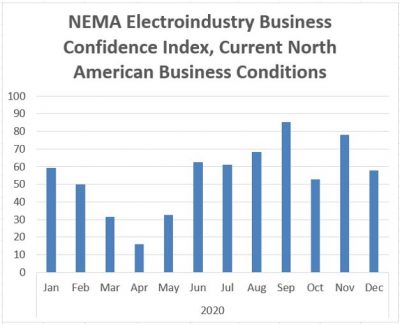
In January 2021, the American Institute of Architects’ (AIA) semi-annual Consensus Construction Forecast, a survey of the nation’s leading construction forecasters, projected a 5.7% decline in nonresidential construction spending in 2021. Construction spending is then projected to grow 3.1% in 2022 as the renewal of economic activity unleashes pent-up demand for nonresidential space.
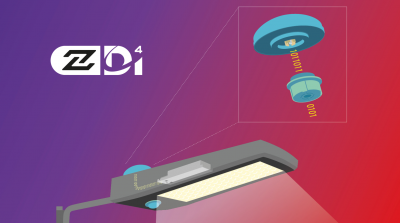
The joint Zhaga-D4i certification program from the DALI Alliance and the Zhaga Consortium has already qualified a number of Zhaga-D4i Book 18 outdoor luminaires with Zhaga receptacles and D4i components. Now certified D4i control devices with Zhaga connectors can also be submitted for Zhaga-D4i certification, according to a recent statement by Zhaga. Eligible devices include light-level or occupancy sensors, as well as control nodes that can communicate wirelessly with external networks, enabling smart, future-proof LED luminaires with IoT connectivity.

Networked lighting controls may get a boost in adoption by shifting the conversation beyond mere energy benefits, says Liesel Whitney-Schulte and Dan Mellinger.

Image courtesy of OSRAM.
Actually – this isn’t just for electrical contractors! Just about anyone can learn how to commission a networked lighting control system (NLC), writes Steve Mesh.
The Continental Automated Buildings Association (CABA) recently released the Executive Summary of its Intelligent Building Energy Management Systems Landmark Research Project, providing a detailed exploration of the current state of the market.
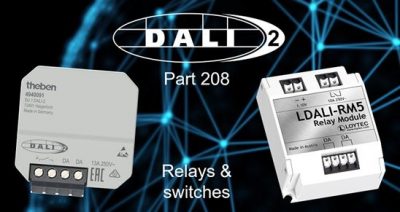
The DALI Alliance recently announced it has extended the DALI-2 certification program to include control gear that function as switches and relays. Such devices implement Part 208 of the DALI-2 certification scheme, which is built on the international IEC 62386 standard.

While “circadian lighting” varies in definition, it generally refers to design that uses intensity and spectrum of light for a non-visual effect—namely, to support regulation of circadian rhythms. A new study suggests that by enabling intensity and spectral adjustment and optimizing exposure based on time of day, designers and owners can minimize the energy tradeoff imposed by associated typically much-higher light levels. This would entail use of an advanced lighting control system capable of scheduled dimming and perhaps spectral emission adjustment.

Are you an electrical contractor? Are you new to the world of Networked Lighting Controls (NLCs)? Are you looking for new opportunities to strengthen your business in these uncertain times?
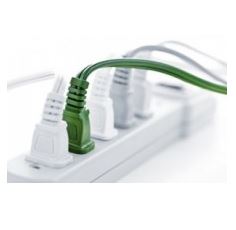
The National Renewable Energy Laboratory recently announced the publication of two updated guides and a Better Buildings Alliance (BBA) Beat Blog on controlling plug and process loads.
The Continental Automated Buildings Association (CABA) recently published a whitepaper on Power Over Ethernet, or PoE, now available for free download.
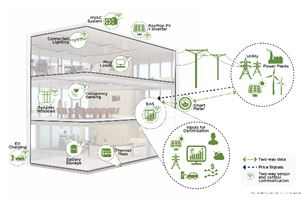
The U.S. Department of Energy (DOE) announced it will provide $65 million through its Connected Communities funding opportunity announcement (FOA) (DE-FOA-0002206) to expand DOE’s network of grid-interactive efficient building communities nationwide.

EiKO’s 25-minute on-demand recorded webinar will teach you about the simple, intuitive, and scalable lighting control system: Xi-Fi Wireless Controls.

A U.S. Department of Energy-funded Pacific Northwest Energy Laboratory (PNNL) study found that hospital nurses value controllability in lighting and that this controllability can translate to greater satisfaction among patients.
Because of the new features provided by many lighting control systems, such as the ability to change colors, some drivers now available in the market are also “programmable.” What does this mean? And why would you want to use programmable drivers?

Jeremy Day, Application Engineering Director for LumenPulse, wrote an interesting article laying out a simple process for designing a lighting control system.

The ioXt Alliance, the Global Standard for IoT Security, recently announced the DesignLights Consortium (DLC) has added ioXt security certification to its Networked Lighting Control System Technical Requirements (Version 5), also known as NLC5. Along with ioXt, NLC5 offers a full breakdown of all DLC-recognized cybersecurity certification options that are specifically designed for interior and exterior NLC systems associated with commercial and industrial buildings, roadways, and exterior environments.

Industry journalist Craig DiLouie, LC, CLCP recently interviewed Matt Ochs, Senior Marketing Director, Lutron Electronics for an article for ELECTRICAL CONTRACTOR. The topic: the role lighting controls can play in risk mitigation during the pandemic. Here’s the transcript.
The Northwest Energy Efficiency Alliance (NEEA) and the DesignLights Consortium (DLC) recently released results of a new study that strengthens the case for expanding use of networked lighting controls (NLC) to significantly drive energy savings in commercial and industrial buildings. The report found that energy savings possible by adding NLCs to LED lighting projects approach 70 percent for some building types, with savings across various categories of buildings averaging 49 percent.

The Northwest Energy Efficiency Alliance (NEEA) recently published a study seeking to compare one-for-one luminaire level lighting control (LLLC) retrofits with a comprehensive networked lighting controls (NLC) redesign. Conducted by the University of Oregon, the study found that a one-for-one LLLC upgrade produced comparable energy savings and lighting quality at a competitive cost.

“In my latest education express course, Integration and Building Automation, I discuss basic uses for a Building Automation System (BAS). One use not mentioned is Contact Tracing, which has been brought to the foreground primarily due to the COVID-19 pandemic (also known as Coronavirus). Contact tracing is potentially an essential part of safely re-opening businesses during Coronavirus and since lighting fixtures and lighting controls are necessary wherever people occupy a building, building management can make use of intelligent lighting control systems to improve their contact tracing methods to ensure their occupants are safe.”
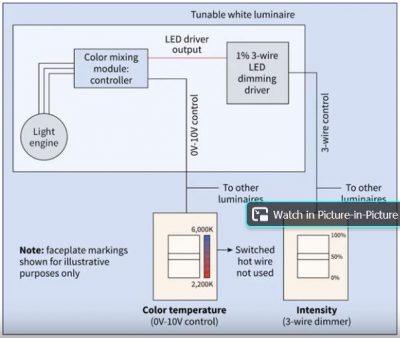
Presented by Craig DiLouie, LC, CLCP, education director for the Lighting Controls Association, this 30-minute webinar provides a deep overview of tunable-white lighting, a relatively new dimension of LED lighting control that is pioneering new capabilities and applications.
Zhaga is planning a 3rd edition of the popular Book 18 specification for outdoor luminaires that will allow for architectures combining an ANSI C136.41 dimming receptacle with a Zhaga receptacle. Book 18 Ed. 3.0 will enable Zhaga-D4i certification of hybrid luminaires as well as control devices with an ANSI interface in addition to the certifications already offered by Book 18 Ed. 2.0.

The National Energy Efficiency Alliance is hosting a webinar Thursday, October 1, from 10-11 AM PDT about the results and methodology behind a new study comparing luminaire-level lighting controls with networked lighting controls.
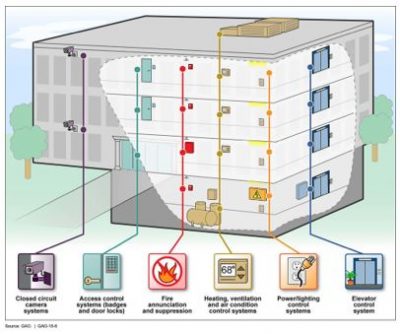
With increasing frequency, lighting control systems are tasked to interoperate with other building systems such as building automation systems (BAS) to share information and automate building functionality. Ensuring communication and smooth interoperability is called integration, a potentially challenging undertaking during a project. This is the topic of a new Education Express course developed for the Lighting Controls Association by C. Webster Marsh, HLB Lighting Design.
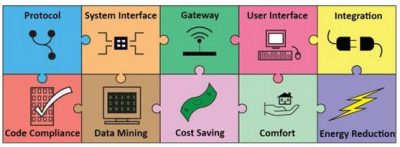
The Lighting Controls Association (LCA) now offers EE115: Integration and Building Automation as a new course in its popular Education Express program.
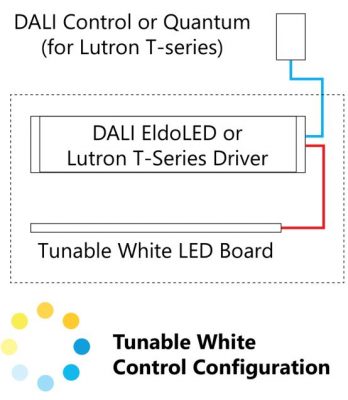
Image courtesy of Axis Lighting
The previous post on Tunable-White Building Blocks talked about differences between using low-level analog control technology as opposed to networked lighting control (NLC) systems that employ digital communication between components. Analog technology such as 0-10V dimmers can in fact be used to control certain color-changing luminaires. Let’s be specific about which types. There are actually three main types of color-changing lighting systems – “dim-to-warm”, “tunable-white”, and “RGB.”
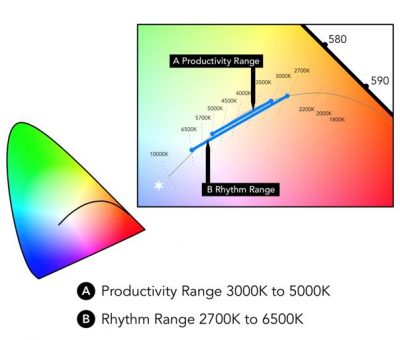
Image courtesy of Lithonia
“Tunable-white and other forms of color-changing lighting have added an extra dimension of capability, flexibility, and complexity to the lighting industry,” writes Mesh. “It’s almost as though we’ve gone from a 2-dimensional world to a 3-dimensional world based on the added complexity of controlling the luminaire’s coloration (typically measured by Correlated Color Temperature ) separately from the luminaire’s lumen output. Don’t be scared! Even though this has exponentially increased the complexity of the equipment and technology, you still don’t need a PhD in lighting to understand this new landscape.”
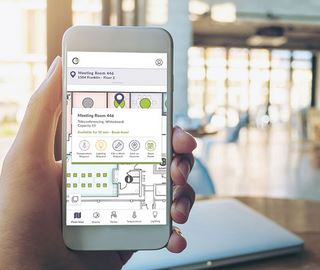
In a recent issue of LD+A, editor Paul Tarricone evaluated three examples of leading-edge control projects, including a Lexus dealership, manufacturing plant, and a corporate office, examining the value today’s advanced controls can deliver to spaces and business operations that go far beyond energy cost savings.

In this article published in LD+A, Chris Davis talks about how collaboration, not technology, is key to implementing smart cities that solve problems and satisfy users.
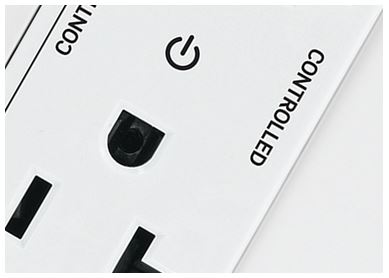
This article, based on the Lighting Controls Association’s new Education Express course EE202: Automatic Plug Load Control, provides an overview of approaches used to automatically control plug loads in commercial buildings.
The DesignLights Consortium (DLC) recently released a new version of its technical requirements for networked lighting controls, aiming to encourage wider market adoption of this energy-saving and smart building-enabling technology by focusing on issues it says are key to increasing customer confidence.
Different types of dimming curves may be incorporated in dimmers, software for lighting control systems, and output devices like LED drivers irrespective of the actual protocol used to communicate between them.
Let’s talk about dimming and dimming curves, and a variety of attributes that you should consider, inquire about, then specify what you actually want.

Hipster business successful teamwork concept, business group assembling jigsaw puzzle
The Lighting Controls Association (LCA) now offers EE305: Protocols as a new course in its popular Education Express program.

The Pacific Northwest National Laboratory’s (PNNL) Ruth Taylor recently contributed an article to LD+A Magazine examining lessons learned during a two-year evaluation of connected lighting systems.

Rebate fulfillment firm BriteSwitch recently stated that about 20% of commercial lighting rebate programs are offering additional or bonus rebate opportunities.
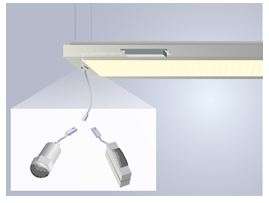
Zhaga Book 20 defines a smart interface between an indoor LED luminaire and a sensing/communication module. The module connects to the LED driver, and typically provides sensory inputs or enables communication between network components.

The U.S. Department of Energy’s (DOE) Interior Lighting Campaign is undergoing a fresh launch as the Integrated Lighting Campaign in June 2020. The program’s core goal of market transformation is the same, with many of the same services and benefits to participants, but the promoted suite of technologies is now going beyond LED adoption toward integrated systems. The Lighting Controls Association is proud to support this program as a member of its Organizing Committee and an inaugural Supporter.
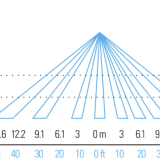
The Lighting Controls Academy has published a video version of EE102A: Occupancy and Vacancy Sensors, a free Education Express course available at YouTube.
The Lighting Controls Academy is pleased to offer Lighting Controls and the 2024 IECC, a Lighting Controls Academy course, available as a free video.

After a brief hiatus, the Lighting Controls Podcast is back with a wide-ranging conversation about where the industry stands today. In this episode, hosts C. Webster Marsh and Ron Kuszmar discuss why consistent content matters, where professionals can start learning lighting controls, and why local reps and manufacturers are often the most overlooked educational resources.

The Lighting Controls Academy is pleased to offer Lighting Controls and the 2021 IECC, a Lighting Controls Academy course, available as a free video.

The Lighting Controls Academy is pleased to offer Part 3 of Lighting Control System Design, a Lighting Controls Academy course, available as a free video.

The Lighting Controls Academy is pleased to offer Part 2 of Lighting Control System Design, a Lighting Controls Academy course, available as a free video.

The Lighting Controls Academy is pleased to offer Part 1 of Lighting Control System Design, a Lighting Controls Academy course, available as a free video.
The Lighting Controls Academy is pleased to offer Daylight-Responsive Lighting Controls, a Lighting Controls Academy course, available as a free video.
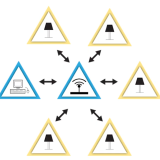
The Lighting Controls Academy is pleased to offer Networked Wireless Lighting Controls, a Lighting Controls Academy course, available as a free video.
In this video by the Northwest Energy Efficiency Alliance, two lighting experts bust popular myths about luminaire-level lighting controls (LLLCs).
























©2026 Lighting Controls Academy, a coalition of the National Electrical Manufacturers Association. Information published at this website has been obtained from sources believed to be reliable. Damages arising from errors, omissions or damages as from the use or misuse of this information are not the responsibility of NEMA nor its vendors. It is not the intent of this site to provide professional services.
This site rocks with Focus.