The Illuminating Engineering Society’s TM-23-11 publication serves as a technical resource for lighting specifiers integrating control into their projects, providing detailed information about lighting control protocols. Get it here.
Navigant Research recently published a blog post about how the advent of LED lighting and lower-cost control technology is changing the lighting controls industry, causing three types of companies to compete for dominance. The article begins: “With the rise of LED lighting and inexpensive controls technologies, the market for networked lighting controls is expected to [...]
In a recent study, the Energy Center of Wisconsin monitored several daylighting systems in Minnesota and Wisconsin and analyzed the results of commissioning those systems. The researchers concluded: “Energy modeling, with its assumption of ideal control, appears to have the potential of being an accurate predictive tool for highly effective (>75%) control systems. However, the [...]
In September 2012, the Lawrence Berkeley National Laboratory published, Responsive Lighting Solutions for the General Services Administration (GSA). The report provides insight into the viability of highly responsive lighting control systems. It reports the results of installing advanced lighting controls in five Federal buildings. The existing lighting in these buildings was upgraded. A number of [...]
The Lighting Controls Association has published NEMA LSD-64-2012, Lighting Controls Terminology, as a supporting document to its Education Express online education system. The glossary is now available as a direct download in Education Express.
Demand for electricity in the United States has gone up in all but four years since 1949. The Department of Energy predicts growth in capacity of 0.6% per year through the year 2040. Many states and utilities have long considered energy efficiency a resource for satisfying growing demand. According to a study by the American [...]
Despite a national recovery from the recession in 2009, construction activity in the United States continued to spiral downward in following years. Total construction spending declined to under $800 billion in 2011 from its peak of more than $1 trillion in 2008. In 2012, the market turned a corner and achieved a level of growth [...]
The Energy Policy Act of 2005 created the Energy-Efficient Commercial Buildings Tax Deduction (CBTD) to encourage owner investment in energy-efficient building systems. The CBTD establishes a special tax deduction rewarding investment in energy-efficient interior lighting, HVAC/hot water systems and building envelope, subject to a cap of up to $1.80/sq.ft. It’s an accelerated tax deduction, meaning [...]
In an ideal world, clients state clear project requirements. The design team unites around a concept. The design documents clearly express the design intent. The contractor installs and starts the system without errors. And users benefit from quality lighting and control. In reality, any number of things can go wrong. The client may have unclear [...]
The Lighting Controls Association has announced the results of a recent survey of regular site users. The purpose of the survey, which was distributed to 15,000 subscribers of the LCA newsletter lightingCONTROL, was to determine satisfaction with the LCA website as well as the popularity of potential features. Respondents totaled 241, or 1.6%. The first [...]
Lighting quality is a critical consideration in effective lighting design, and often should take priority over energy savings and the economies of cost. But what is lighting quality? It goes beyond energy and cost and light levels to include brightness, light distribution, color, aesthetics, daylight, ease of use for controls, and other issues. While many [...]
Lighting accounts for about a third of electrical energy consumption in commercial buildings. As advanced energy-saving lighting controls still have a minority penetration in the existing building stock, building owners have a major opportunity to reduce energy costs with lighting control. Adoption of advanced lighting controls faces the usual hurdles affecting all energy-efficient lighting, including [...]
Utility and regional energy efficiency organization rebates and incentives have been a major driver in demand for energy-efficient lighting and controls since the early 1990s. Today, more than $6 billion in commercial lighting rebates and other incentives are offered by utilities and energy efficiency organizations covering some 80% of the United States. Currently, rebates and [...]
The National Electrical Manufacturers Association (NEMA) has published NEMA WD 7 Occupancy Motion Sensors Standard. Previously published as a guide and not a standard, WD 7 promotes uniformity for the definition and measurement of characteristics relevant to the use and application of occupancy motion sensors. This standard covers the definition and measurement of field of [...]
The International Energy Conservation Code (IECC) is a model residential and commercial building energy code produced by the International Code Council. First published in 1998, the IECC was updated in 2000, 2003, 2006, 2009 and, earlier this year, 2012. The IECC is actually not a code, but instead a template for legal jurisdictions to use [...]
Although the national economic recovery is now two and a half years old, construction spending has continued to contract. A multitude of factors prevented a recovery for this beleaguered industry in 2011. Lenders that have been extremely reticent to finance construction projects, budget shortfalls at all levels of government, the ripple effect of overbuilding, depletion [...]
In July 2011, the Department of Energy recognized the ASHRAE/IES 90.1-2007 standard as the new national energy standard, superseding the 2004 version. In a bold move, on October 19, 2011, DOE recognized the 2010 version of 90.1 as the new national energy standard. By October 18, 2013, all states in the United States must put [...]
As demand for lighting controls continues to grow, advanced solutions are becoming increasingly specified while also becoming increasingly sophisticated. This increasing sophistication translates to greater owner benefit but can also pose greater risk of design and installation mistakes. In a perfect world, designers create clear and detailed lighting control requirements that are easily installed by [...]
Because of the strong energy savings potential offered by daylight harvesting, coupled with advancing technology, codes and standards are now beginning to address daylight harvesting—specifically, International Energy Conservation Code (IECC) 2009, ASHRAE/IES 90.1-2010, ASHRAE 189.1 and Title 24-2008.
“If you boost the lighting at certain times of day, you’ll get a better performance from workers,” remarks Dr Martine Knoop, a senior lighting specialist at Philips Lighting, commenting on the study that took place at Bartenbach Lichtlabor in Austria. The scientists found in 2007 that if offices used more adjustable lighting, the employees working within them would work more productively.
Last month, the Lighting Controls Association published a guide to the new ASHRAE/IES 90.1-2010 standard, focusing on its prescriptive lighting power requirements as well as significant changes to its scope and administrative requirements. In Part 2 of this series on the new standard, we will focus on its extensive new mandatory and optional lighting control requirements. Regarding controls, the changes are nothing short of historic.
The National Electrical Manufacturers Association (NEMA) has published two new solid state lighting standards: 1) NEMA SSL 1-2010 Electronic Drivers for LED Devices, Arrays, or Systems, and 2) NEMA SSL 6-2010 Solid State Lighting for Incandescent Replacement—Dimming.
With these publications, NEMA establishes harmonized requirements and expectations for solid state lighting (SSL). Both are directed toward designers, manufacturers, and users of SSL products.
ASHRAE/IES 90.1, Energy Standard for Buildings Except Low-Rise Residential Buildings is published every three years to provide states and other jurisdictions with a model commercial building energy code. The 2010 version, published November 2010, represents the most dramatic revision of the standard since 1999. In this two-part series of special reports by the Lighting Controls Association, we will examine the new energy standard in detail. Part one, presented here, focuses on changes to the prescriptive lighting power requirements as well as changes to scope and administrative requirements. Part two, to be published next month, will focus on the standard’s extensive list of new mandatory and optional lighting control requirements.
While activity for institutional projects should hover near 2010 levels, there is likely to be a modest decline in commercial construction in 2011, according to the AIA Consensus Construction Forecast Panel. Overall nonresidential construction spending is expected to decrease by 2% for the year. The Panel believes 2012 will produce stronger gains, however, with overall building construction rising about 5%, with growth twice the rate of the more cyclical commercial sector. This construction outlook reviews the year’s top line construction numbers, shows where leading construction and electrical industry indicators are trending, and provides a summary of the latest AIA Consensus Construction Forecast for 2011.
On its website, Lutron offers an informative short guide to dimming. Check it out here.
The big news is that ASHRAE 90.1-2010 has been published. It represents a major leap in evolution of the energy standard; it’s basically almost an entirely new standard. Lighting controls play a starring role. Here is a summary of lighting control-related changes that caught my eye at first glance.
Code authorities are considering approaches to energy codes that are performance based instead of mainly prescriptive. In a performance-based code, the building would be designed so that it would operate within a target limit for energy consumption—using annual kWh/sq.ft. instead of W/sq.ft. as the primary metric.
This month, Federal efficiency standards regulating fluorescent magnetic T12 ballasts entered their final phase, effectively eliminating these ballasts from the market, with few exceptions.
Researchers at the National Research Council Canada – Institute for Research in Construction (NRC-IRC) conducted a study to determine how far, how fast and over what period lighting can be dimmed before occupants notice and are adversely affected. The results suggest a role for dimmable lighting in demand response programs.
Green construction codes and standards are beginning to emerge on the national code stage. The standards go beyond energy standards such as 90.1 and the International Energy Conservation Code (IECC) to cover additional areas such as site sustainability, water efficiency, indoor environmental quality and materials and resources. The first is ASHRAE Standard 189.1, Standard for the Design of High-Performance, Green Buildings Except Low-Rise Residential Buildings, published by ASHRAE in January 2010 in conjunction with the USGBC and the Illuminating Engineering Society.
This construction outlook reviews the year’s topline construction numbers, examines the directions that leading construction and electrical industry indicators are pointing, and provides a summary of the latest AIA Consensus Construction Forecast for 2010.
The National Electrical Manufacturers Association (NEMA) has published LL 9-2009 Dimming of T8 Fluorescent Lighting Systems. This new standard is the first coordinated guidance from industry on the dimming of T8 fluorescent lighting systems; LL 9 covers ranges between 100% and approximately 35% output (60mA lamp current). The publication was a result of discussions between numerous manufacturers and end-users as well as years of data gathering, testing, and analysis.
In July 2009, the Department of Energy issued new energy efficiency standards for commercial general-service fluorescent lamps and incandescent (and halogen) reflector lamps. The new rules take effect July 14, 2012 and will basically eliminate products with the lowest efficiency and lowest cost. In the case of fluorescent lamps, equivalent-performance products are readily available, such as T8 lamps, and the market is expected to shift to that and other technologies. In the case of incandescent reflector lamps, only a few equivalent-performance products are readily available that comply, such as infrared-coated halogen lamps, and manufacturers are expected to develop new substitutes.
While general-service incandescent lamps have received the most attention in media coverage of the Energy Independence and Security Act (EISA) of 2007, with provisions beginning to take effect in 2012, many popular incandescent reflector lamps are being outlawed this month.
ASHRAE/IES 90.1 Energy-Efficient Design of New Buildings Except Low-Rise Residential Buildings was first published in 1975 and updated in 1980, 1989, 1999, 2001, 2004 and 2007. After 2001, the intention is to update the Standard every three years. Applicability: Today, most states have adopted either 90.1 or the International Energy Conservation Code (IECC) as their [...]
IECC 2009 contains a number of changes impacting lighting for commercial buildings, including:
• Forced choice of compliance with entirety of IECC or 90.1
• Required circuiting for independent control of lighting in “daylight zones”
• Revision of additional retail display allowances
• Added exemptions to interior lighting wattage that must be counted for compliance
• Splitting the exterior power allowance using a system of outdoor lighting zones
• Clarifications and practical application language changes
The Energy Independence and Security Act of 2007 contains significant provisions affecting the sale of metal halide lighting fixtures. Starting in 2009, 150-500W metal halide lighting fixtures must contain ballasts that operate at a certain level of efficiency, virtually eliminating probe-start lamps and ballasts from new fixtures. This provision of the 2007 Energy Act essentially makes a Federal standard of efficiency requirements already enacted in California, New York, Arizona, Oregon, Rhode Island and Washington.
The Energy Policy Act (EPAct) of 2005 created the Commercial Buildings Deduction (CBD), which established an accelerated tax deduction rewarding investment in energy-efficient interior lighting, HVAC/hot water systems and building envelope. Initially set to expire December 31, 2007 and then December 31, 2008, the CBD was recently extended by Congress to expire in five years: December 31, 2013.
The National Electrical Manufacturers Association (NEMA) has published LC 1-2007 Test Procedure for Compatibility of Hearing Aids and Ultrasonic Lighting Control Devices. This standard provides a basis to evaluate the possible interactions between ultrasonic lighting control devices and hearing aids utilizing a set of test procedures. This evaluation can be used as the basis for specifying performance criteria for both hearing aids and occupancy sensors to eliminate interference.
In terms of lighting, ASHRAE 90.1-2007 clarifies the Standard’s intent and enacts several refinements but otherwise doesn’t revise the lighting power density (W/sq.ft.) limits from the 2004 version, which itself was 20-25 percent more stringent than the 1991/2001 versions.
Lighting Controls Academy Publishes Education Video Covering Occupancy and Vacancy Sensors
06/03/2026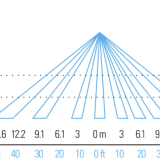
The Lighting Controls Academy has published a video version of EE102A: Occupancy and Vacancy Sensors, a free Education Express course available at YouTube.
Lighting Controls Academy Publishes Video Course on Lighting Controls and the 2024 IECC
05/04/2026
The Lighting Controls Academy is pleased to offer Lighting Controls and the 2024 IECC, a Lighting Controls Academy course, available as a free video.
Lighting Controls Podcast: Simple Devices Do Not Mean Simple Solutions
03/13/2026
After a brief hiatus, the Lighting Controls Podcast is back with a wide-ranging conversation about where the industry stands today. In this episode, hosts C. Webster Marsh and Ron Kuszmar discuss why consistent content matters, where professionals can start learning lighting controls, and why local reps and manufacturers are often the most overlooked educational resources.
Lighting Controls Academy Publishes Video Course on Lighting Controls and the 2021 IECC
03/11/2026
The Lighting Controls Academy is pleased to offer Lighting Controls and the 2021 IECC, a Lighting Controls Academy course, available as a free video.
Lighting Controls Academy Publishes Video Course on Lighting Control System Design (Part 3)
02/20/2026
The Lighting Controls Academy is pleased to offer Part 3 of Lighting Control System Design, a Lighting Controls Academy course, available as a free video.
Lighting Controls Academy Publishes Video Course on Lighting Control System Design (Part 2)
02/18/2026
The Lighting Controls Academy is pleased to offer Part 2 of Lighting Control System Design, a Lighting Controls Academy course, available as a free video.
Lighting Controls Academy Publishes Video Course on Lighting Control System Design (Part 1)
02/16/2026
The Lighting Controls Academy is pleased to offer Part 1 of Lighting Control System Design, a Lighting Controls Academy course, available as a free video.
Lighting Controls Academy Publishes Video Course on Daylight-Responsive Lighting Control
02/12/2026
The Lighting Controls Academy is pleased to offer Daylight-Responsive Lighting Controls, a Lighting Controls Academy course, available as a free video.
Lighting Controls Academy Publishes Video Course on Wireless Lighting Controls
02/10/2026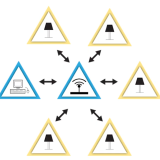
The Lighting Controls Academy is pleased to offer Networked Wireless Lighting Controls, a Lighting Controls Academy course, available as a free video.
Busting Myths About LLLCs
01/02/2026
In this video by the Northwest Energy Efficiency Alliance, two lighting experts bust popular myths about luminaire-level lighting controls (LLLCs).