The National Electrical Manufacturers Association (NEMA) has published NEMA LSD 23-2016 Recommended Practice—Lamp Seasoning for Fluorescent Dimming Systems. This paper provides a recommended practice to season lamps for fluorescent dimming systems. This paper is an update to NEMA LSD 23-2010, developed by the NEMA Lighting Systems Division. NEMA LSD 23-2016 may be downloaded at no [...]
Vehicles are expected to play a big part in the Internet of Things. By 2020, 250 million connected vehicles will be on the road, creating new services and driving capabilities, according to Gartner, Inc. Infotainment is high in demand, though other capabilities are enabled, including crash warning, traffic violation warning and relaying weather, traffic and [...]
The National Electrical Manufacturers Association (NEMA) published NEMA SSL 7A-2015 Phase-Cut Dimming for Solid State Lighting—Basic Compatibility. This standard provides compatibility requirements when a forward phase-cut dimmer is combined with one or more dimmable light-emitting diode (LED) light engines (LLEs). An LLE, for the purposes of this document, comprises one or more LED modules, LED [...]
About two-thirds (64%) of the United States is covered by prescriptive lighting rebates, according to BriteSwitch, a rebate fulfillment company. These rebates can significantly reduce the installed cost of new lighting in existing buildings and improve payback by 20-25%, which would reduce a two-year payback to about 1.5 years. Rebates became popular in the 1990s [...]
The Northwest Lighting Network recently published an article about the potential of luminaire-integrated lighting controls. From the article: While traditional lighting control strategies can yield considerable benefits, Luminaire Level Lighting Controls (LLLC) show promise of both easier installation and commissioning and deeper energy savings beyond other lighting controls. And: The Design Lights Consortium will publish [...]
The Lighting Controls Association is proud to offer an advance look at a selection of new products that will be displayed by members at LIGHTFAIR International April 26-28 in San Diego. While some can be seen here, many more await at member booths, so be sure to visit! ACUITY BRANDS WSX D 0 – 10V [...]
GDP ended 2015 strongly with an annual estimated growth rate of 2.4%. The overall U.S. economy continues to improve. Positive economic conditions continue to support growth in demand for nonresidential construction. The nonresidential construction sector enjoyed double-digit growth in 2015, and strong momentum is expected to continue in 2016. The AIA’s semi-annual Consensus Construction Forecast, [...]
Craig DiLouie, LC recently had the opportunity to interview David Ciccarelli, VP Dynamic Lighting, Acuity Brands Lighting, Inc. The topic: tunable-white lighting. DiLouie: Looking at LED sources and controls, what are the different technological methods used to produce tunable-white light in commercial luminaires? Ciccarelli: The goal of Tunable White lighting is to reproduce multiple color [...]
As adoption of dimmable lighting grows, task tuning, a lighting control strategy, is becoming increasingly viable as a way to save energy while increasing occupant comfort. Also called “institutional tuning” and “high-end trim,” task tuning involves reducing lighting in a space based on IES-recommended maintained task light level requirements or user preference for individual spaces [...]
Lighting controls are now required by energy codes in the large majority of new commercial buildings. As demand for controls continues to increase, so does demand for commissioning as a quality assurance process. This process helps ensure that installed controls satisfy both the design intent and owner requirements by minimizing error across the construction process. [...]
Republication of Postings from the U.S. Department of Energy (DOE) Solid-State Lighting Program by Jim Brodrick, SSL Program Manager, U.S. Department of Energy For years now, people have been talking about the “LED revolution” that’s being fomented by the disruptive technology that is solid-state lighting. But at DOE’s inaugural Connected Lighting Systems Meeting, held last [...]
Recently published in EC&M Magazine: According to research from the ABB Group, the following segments made up the home automation market last year in North America. Lighting, a leading product category for the electrical industry, pulled in 23% of that total. This trend reiterates the importance of lighting and control opportunities in this growing automation [...]
The National Electrical Manufacturers Association (NEMA) published NEMA LSD 73-2015, Energy Savings with Fluorescent and LED Dimming. This new white paper describes the signal path from the user control input through the control wiring, ballast or driver, and lamp or LED module. It also explains factors that affect energy consumption and savings, efficacy and user [...]
BUILDING OPERATING MANAGEMENT Magazine recently published an article about recommissioning lighting control systems. I was happy to be interviewed and contribute to the article. Research suggests retroactive commissioning can generate real energy savings and maximize the performance and value of installed equipment. Check it out here.
Republication of Postings from the U.S. Department of Energy (DOE) Solid-State Lighting Program by Jim Brodrick, SSL Program Manager, U.S. Department of Energy As we mentioned in these Postings a few weeks ago, the biggest takeaway from this year’s LIGHTFAIR® International was the prevalence of connected products, and the fact that sensors and controls seemed [...]
The U.S. Department of Energy (DOE) has begun releasing results from the 2012 Commercial Buildings Energy Consumption Survey (CBECS). The CBECS is an estimated profile of the U.S. commercial building stock based on an interviewed sampling. Information includes number of buildings, floorspace, age, building type, region, energy consumption, end-use equipment and more. DOE defines a [...]
The U.S. Department of Energy (DOE) has issued new energy standards for general-service fluorescent lamps that are expected to reduce availability of standard 4-ft. linear and 2-ft. U-bend 32W T8 lamps as well as some reduced-wattage T8 lamps. The rules go into effect January 26, 2018. After that date, distributors may continue to sell their [...]
Agostino Renna, President & CEO of GE Lighting for Europe, The Middle East and Africa, recently authored an interesting series of blog posts, “More Than Light,” in which he describes the potential for intelligent cities and the role of lighting in these schemes. He notes: “For me, the most important thing to consider when discussing [...]
According to BriteSwitch, for the fifth year in a row, lighting control rebates continue to remain at fairly high, stable levels compared to their costs. For example, current average rebates now available include: * $32.68 for remote-mounted occupancy sensors * $30.30 for fixture-mounted occupancy sensors BriteSwitch reports: “The relatively high rebate amounts (versus the cost), [...]
The overall economy continues to improve, with all major economic indicators signaling a trajectory of continuing growth. GDP ended 2014 very strongly, with forecasts calling for 3% growth in 2015. Business confidence reached a level of 61, signaling average belief in expansionary business conditions. Economic conditions are supporting growth in demand for construction activity, particularly [...]
The Energy Commission has approved the California Advanced Lighting Controls Training Program (CALCTP) and the National Lighting Contractors Association of America (NLCAA) as Lighting Acceptance Test Technician Certification Providers. This action gives CALCTP and NLCAA authorization to train and certify qualified individuals and employers beyond the interim period established by the 2013 Energy Standards. Individuals [...]
Effective July 1, 2014, the California Energy Commission adopted changes to the California building Efficiency Standards (Title 24, Parts 1 and 6) that require lighting controls and devices to be certified as properly installed and operational, prior to issuance of occupancy permits. All acceptance test technicians must be employed by an acceptance test employer that [...]
Daintree Networks® recently announced that is has collaborated with Peerless Research Group (PRG) on behalf of Modern Materials Handling and surveyed hundreds of warehouse professionals to better understand how enterprises are embracing and adopting the Internet of Things (IoT). The results showed that while IoT adoption is clearly still in its early stages, over 10 [...]
In 2014, the International Code Council published the 2015 International Energy Conservation Code (IECC), a model residential and commercial building energy code. ICC states: “This code shall regulate the design and construction of buildings for the use and conservation of energy over the life of each building.” The IECC is not a code in itself [...]
Given current adoption of commercial building energy codes, conventional wisdom indicates that LED lighting is frequently specified with automatic lighting controls. However, there is little public data available concerning market penetration of LED lighting, how often it is specified as controllable and with lighting controls, owner preferences, and how satisfied specifiers and installers are with [...]
The National Electrical Manufacturers Association (NEMA) recently updated LSD 64-2014 Lighting Controls Terminology. This white paper, which was originally published in 2012, was updated to clarify terminology related to daylight responsive controls. NEMA LSD 64 defines terminology related to controls for lighting systems for non-residential and residential applications. The goal of LSD 64 is for [...]
As reported earlier this week on this blog, the U.S. Department of Energy (DOE) revised its October 2013 report, Dimming LEDs with Phase-Cut Dimmers: The Specifier’s Process for Maximizing Success. The new report features recommendation of a National Electrical Manufacturers Association (NEMA) lighting standard, NEMA SSL 7A-2013 Phase Cut Dimming for Solid State Lighting: Basic [...]
Republication of Postings from the U.S. Department of Energy (DOE) Solid-State Lighting Program by Jim Brodrick, SSL Program Manager, U.S. Department of Energy You may recall that last year, DOE’s GATEWAY program released a report entitled Dimming LEDs with Phase-Cut Dimmers: The Specifier’s Process for Maximizing Success, which was created in response to issues raised [...]
Update: On September 26, 2014, the U.S. Department of Energy (DOE) named the ASHRAE/IES 90.1-2013 energy standard as the new national energy reference standard, superseding the 2010 version in effect until then. Within two years, all states in the United States must put into effect a commercial building energy code at least as stringent as [...]
Outdoor lighting controls is undergoing a mini-revolution that offers new design and selling opportunities while challenging electrical professionals to stay on top of technological change. Traditionally, outdoor lighting control was relatively simple. A typical scheme featured a controller providing automatic ON/OFF based on time of day (using an astronomical time switch) or daylight (photosensor). The [...]
With efficacy and service life steadily increasing and costs declining by about 18 percent each year (Memoori, 2014), the LED revolution continues to develop at a rapid pace. LED’s inherent compatibility with digital control, aided by other trends, is setting the stage for the next LED revolution: smart lighting control. Many LED products are sold [...]
Lutron’s Dr. Pekka Hakkarainen recently wrote an article for LEDs MAGAZINE that makes the case that further LED adoption depends on advanced lighting controls. Check it out here.
Guest post by Brent Protzman, PhD, CEM, LEED GA, LC Brent Protzman is the Manager of Energy Information & Analytics at Lutron Electronics. Today, smart building technology is changing the way we think about lighting control and building integration. Manufacturers can increasingly deliver components that maximize energy-efficiency and integrate with other building systems to provide [...]
Light is comprised of wavelengths that the human eye interprets as colors. For an object to be perceived a certain color, that color must be present both in the light striking an object and the object reflecting the light towards the observer’s eye. Because of this, the choice of lamp for white-light general lighting can [...]
The Illuminating Engineering Society, in partnership with the Lighting Controls Association, has published LEM-7, Lighting Controls for Energy Management, a detailed guide to energy-saving lighting controls. The publication was written by Craig DiLouie, LC in support of the IES Energy Management Committee. The 48-page 8.5×11 guide, which is available for $35 (IES members) and $50 [...]
ANSI/ASHRAE/IES Standard 202, Commissioning Process for Buildings and Systems, identifies the minimum acceptable commissioning process for buildings and systems as described in ASHRAE’s Guideline 0-2005, The Commissioning Process. Standard 202 is ASHRAE’s first standard focused on the commissioning process. The commissioning process as detailed in Standard 202 applies to all construction projects and systems and [...]
The U.S. Department of Energy (DOE) has published a new report, Dimming LEDs with Phase-Cut Dimmers: The Specifier’s Process for Maximizing Success. The report was created in response to issues raised about dimming by energy efficiency organizations and specifiers, and is based on experience from CALiPER testing and GATEWAY demonstrations. While progress has been made [...]
On October 18, 2013, all states were required by the U.S. Department of Energy (DOE) to put in place a commercial building energy code at least as stringent as the 2010 version of the ASHRAE/IES 90.1 energy standard. Eight states are in compliance as of October 2013. States are expected to adopt 90.1-2010 in whole [...]
California has announced the 2013 version of its Title 24 energy code, which regulates energy-efficient design of buildings. The changes take effect in 2014 and are mandatory. The California Lighting Technology Center has published a guide to the major changes. Download it here.
A survey of two groups of professionals describing themselves as electrical contractors and energy consultants, conducted by the Lighting Controls Association from its lightingCONTROL newsletter database, suggests automatic lighting controls are becoming more popular in lighting retrofits. Respondents reported lighting controls were considered in over 50 percent and installed in over 30 percent of their [...]
Lighting Controls Academy Publishes Education Video Covering Occupancy and Vacancy Sensors
06/03/2026
The Lighting Controls Academy has published a video version of EE102A: Occupancy and Vacancy Sensors, a free Education Express course available at YouTube.
Lighting Controls Academy Publishes Video Course on Lighting Controls and the 2024 IECC
05/04/2026
The Lighting Controls Academy is pleased to offer Lighting Controls and the 2024 IECC, a Lighting Controls Academy course, available as a free video.
Lighting Controls Podcast: Simple Devices Do Not Mean Simple Solutions
03/13/2026
After a brief hiatus, the Lighting Controls Podcast is back with a wide-ranging conversation about where the industry stands today. In this episode, hosts C. Webster Marsh and Ron Kuszmar discuss why consistent content matters, where professionals can start learning lighting controls, and why local reps and manufacturers are often the most overlooked educational resources.
Lighting Controls Academy Publishes Video Course on Lighting Controls and the 2021 IECC
03/11/2026
The Lighting Controls Academy is pleased to offer Lighting Controls and the 2021 IECC, a Lighting Controls Academy course, available as a free video.
Lighting Controls Academy Publishes Video Course on Lighting Control System Design (Part 3)
02/20/2026
The Lighting Controls Academy is pleased to offer Part 3 of Lighting Control System Design, a Lighting Controls Academy course, available as a free video.
Lighting Controls Academy Publishes Video Course on Lighting Control System Design (Part 2)
02/18/2026
The Lighting Controls Academy is pleased to offer Part 2 of Lighting Control System Design, a Lighting Controls Academy course, available as a free video.
Lighting Controls Academy Publishes Video Course on Lighting Control System Design (Part 1)
02/16/2026
The Lighting Controls Academy is pleased to offer Part 1 of Lighting Control System Design, a Lighting Controls Academy course, available as a free video.
Lighting Controls Academy Publishes Video Course on Daylight-Responsive Lighting Control
02/12/2026
The Lighting Controls Academy is pleased to offer Daylight-Responsive Lighting Controls, a Lighting Controls Academy course, available as a free video.
Lighting Controls Academy Publishes Video Course on Wireless Lighting Controls
02/10/2026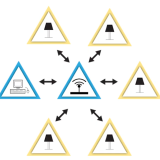
The Lighting Controls Academy is pleased to offer Networked Wireless Lighting Controls, a Lighting Controls Academy course, available as a free video.
Busting Myths About LLLCs
01/02/2026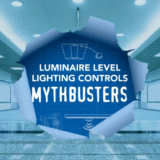
In this video by the Northwest Energy Efficiency Alliance, two lighting experts bust popular myths about luminaire-level lighting controls (LLLCs).