The BETA Technologies Project was recognized with a Lighting Control Innovation Award of Merit in the 2025 Illumination Awards held by the Illuminating Engineering Society. Lighting and control design by Stantec, Studio III Architecture, and Scott + Partners, Inc. Photography by Ryan Bent Photography.
The Lighting Control Innovation Award was created in 2011 as part of the Illuminating Engineering Society’s Illumination Awards program, which recognizes professionalism, ingenuity, and originality in lighting design. The Lighting Controls Academy is proud to be a founding and longstanding founding sponsor of the Lighting Control Innovation Award, which recognizes projects that exemplify the effective use of lighting controls.
In the heart of a bustling industrial zone in South Burlington, VT, a remarkable project has taken shape—a combined manufacturing facility and workplace interior that stands as a beacon of innovation. This project isn’t just about bricks and mortar; it’s a testament to the transformative power of exceptional lighting and control design.
Traditional industrial facilities often struggle with lighting uniformity, energy efficiency, and occupant control due to large-scale, high-ceiling environments. The challenge for the project team was to integrate advanced controls that maximized daylight, reduced energy consumption, and provided users with adaptable, easy-to-manage settings for dynamic lighting system integration.
The solution: a digitally distributed network withluminaire embedded wireless nodes that seamlessly blends timeclock, occupancy, and daylight-based automation with user-accessible local controls.
In a masterful blend of form and function, every element of the lighting concept was meticulously crafted to highlight the architectural features. Seamlessly integrated into the architectural environment, the lighting system achieved a harmonious balance, catering to the diverse needs of building occupants, architects, engineers, and owners. This integration not only enhanced the aesthetic appeal of the space but also fulfilled all functional requirements,embodying a perfect synergy of design and utility.
One of the standout achievements of this project is its energy performance. The net-zero ready design exceeds the 2020 Vermont energy code’s additional efficiency measures for reduced lighting power, with a resulting LPD of 0.65. A sophisticated lighting control system was implemented to improve building performance and occupant experience. This system uses real-time daylight harvesting, occupancy sensors, and a programmable time clock to control dynamic, tunable lighting. The tunable lighting adjusts color temperature(CCT) to support circadian rhythms in this 24/7 facility, optimizing visual comfort and energy efficiency.
This project demonstrates how intelligent lighting controls can elevate an industrial facility—seamlessly blending automation, efficiency, and user adaptability to create a high-performing, human-centric environment.

The manufacturing area is illuminated by 186 tunable white luminaires each with an integral photocell and occupancy sensor essential for this daylit space.
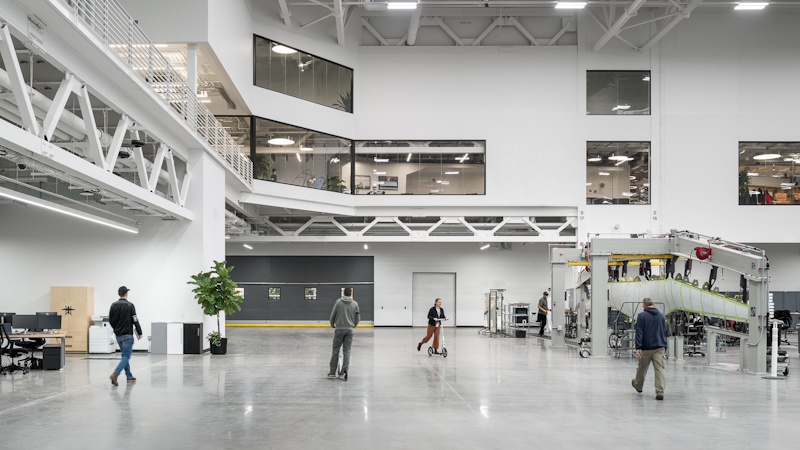
The manufacturing area is enabled with timeclock controls as part of a digitally distributed network system. Luminaire level wireless control nodes enhance long-term program maintainability.
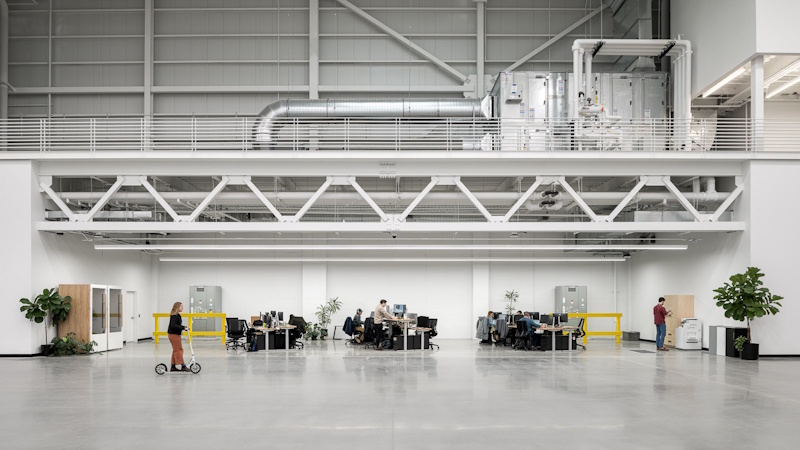
Dimming relay switches are strategically located throughout the space for accessibility and adjustability by the occupants including the open office workspace.
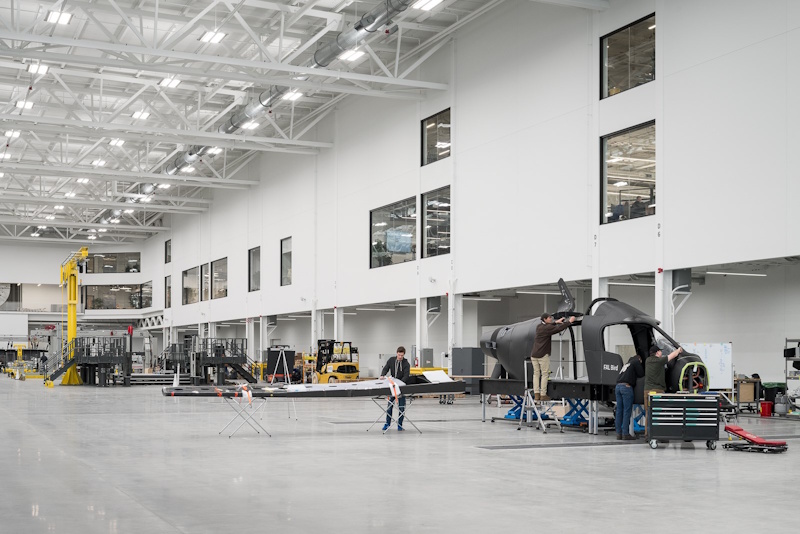
At over 85,000 sq.ft., the expansive manufacturing floor is divided into twelve zones for more granular control of the space.
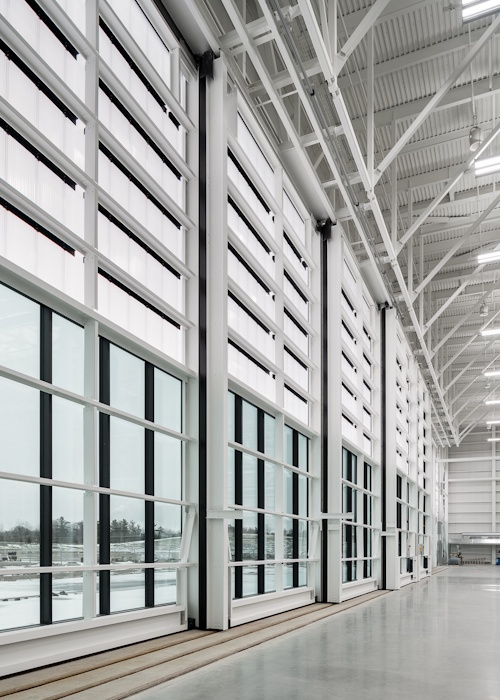
From the expansive skylight to the side lighting at the hanger doors, daylight harvesting controls are key to conserving energy within the facility.
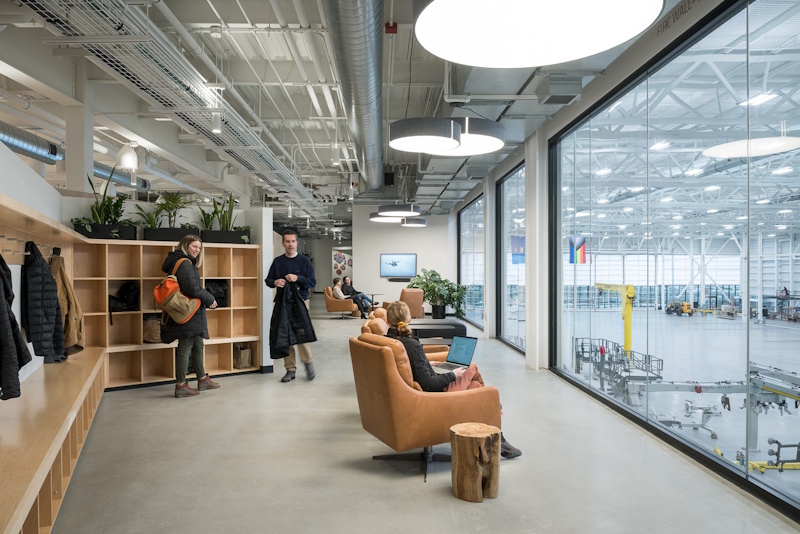
Luminaires at the upper-level workplace are divided into lighting control network zones based on fixture type and room for a highly flexible environment.
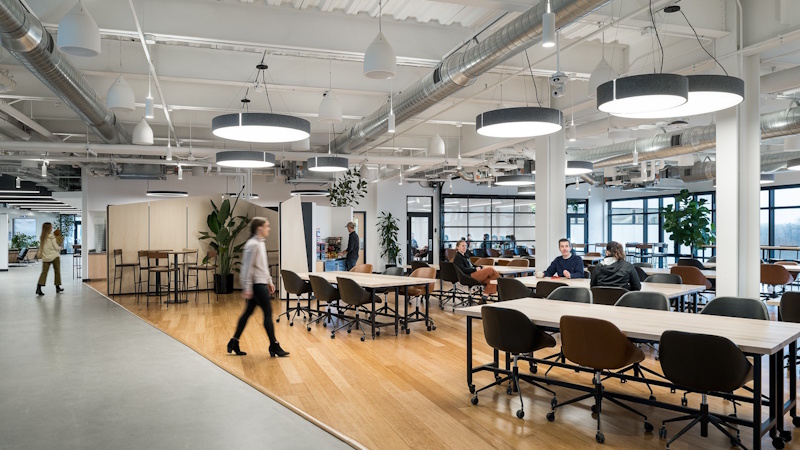
The common areas utilize timeclock scheduling based business hours, occupancy sensors for automated control outside of business hours, and photocells at daylit zones.
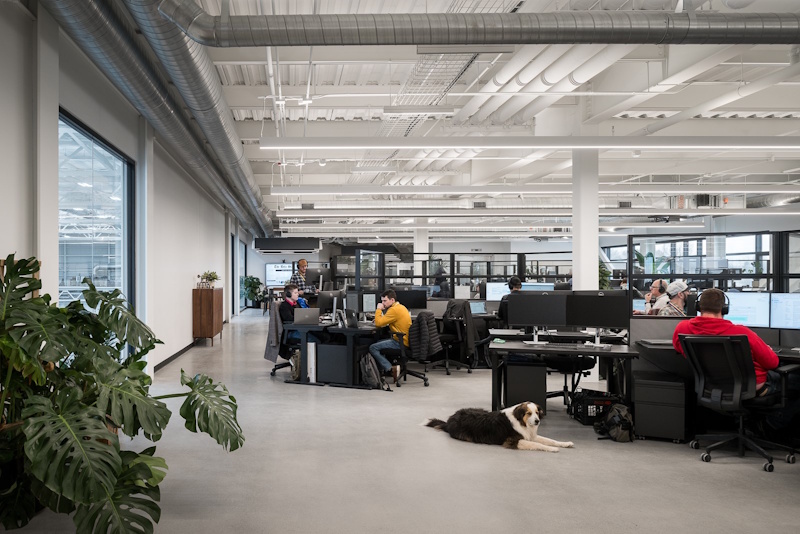
Each luminaire within the open office has its own dimmable zone that can be adjusted from a local touchscreen wall switch for advanced control capabilities.
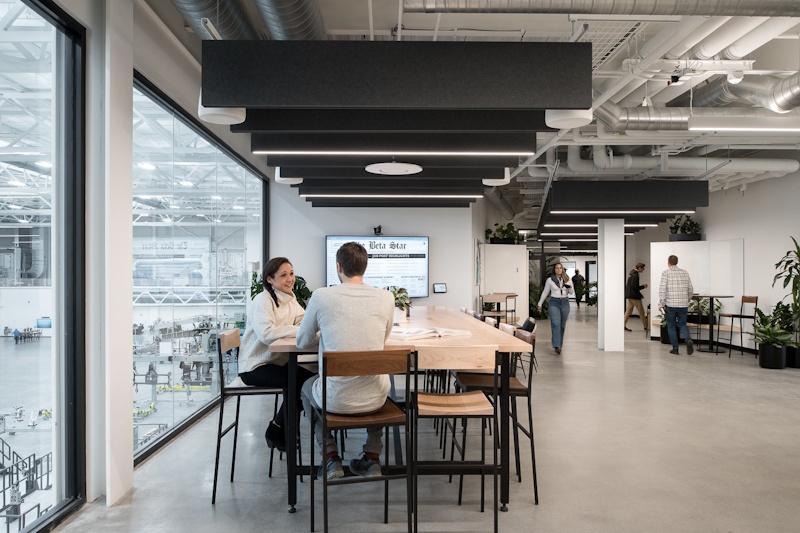
Lighting control device locations and finishes were coordinated with the project architecture to integrate seamlessly into the design.