Image courtesy of Lutron Electronics.
A new application for voice-control personal assistants is control of home systems such as lighting, shades, thermostats, A/V, security, and other smart devices. A typical solution includes a virtual assistant device (phone or speaker), Wi-Fi connection, downloadable smart device app, and a compatible lighting or home automation system. This article by Craig DiLouie, LC, CLCP describes typical solutions, how they work, and their benefits.

Image courtesy of Eaton.
Controlling plug loads is a natural fit for the lighting controls industry, as the same devices and strategies are used for automatic shutoff of plug loads such as task lighting as for general lighting. This feature article by LCA Education Director Craig DiLouie, LC, CLCP looks at energy code requirements, compliance options, and control types.

Distribution of energy savings across the 114 buildings.
The DesignLights Consortium’s (DLC) new report, Energy Savings from Networked Lighting Control (NLC) Systems, estimates average lighting energy savings of 47% resulting from installation of networked lighting control systems. The report indicates high potential energy savings for networked controls, supports layered control strategies as a means to maximize savings, and may be used to justify new and larger utility rebates. Craig DiLouie, LC, CLCP breaks it down in this month’s featured article.

Image courtesy of Eaton
Most commercial building energy codes require automatic lighting shutoff. This common-sense strategy also adds value to lighting upgrades in existing buildings. Remote switching is one method, with an option being switches residing in a metal cabinet-type enclosure called a panel. This panel can serve as the backbone for a complete energy code-compliant control system that responds to a wide range of control inputs for indoor and outdoor lighting control. It is typically sold as a new complete unit, though panelboard retrofit assemblies are available.
This article describes common panel-based lighting control systems.
In May 2016, the DesignLights Consortium® (DLC) released V.1.0 of its Networked Lighting Control Systems Specification, which formed the basis of a new Qualified Lighting Products List (QPL). The intent was to provide utilities and energy efficiency programs a resource to qualify networked lighting control systems so they could be covered in commercial sector lighting [...]

Image courtesy of Leviton
Occupancy and vacancy sensors are devices that detect when a space is unoccupied and accordingly automatically turn OFF (or dim) the lights, thereby saving energy. The device may also turn the lights ON automatically upon detecting the presence of people, providing convenience and a potential security aid. According to the Lawrence Berkeley National Laboratory, occupancy-based [...]

Right image courtesy of Schneider Electric.
A good lighting design includes a good controls design. Lighting controls play a critical role in lighting systems, enabling users manually or automatically to: • turn the lights ON and OFF using a switch; and/or • adjust light output up and down using a dimmer. This basic functionality can be used to generate these benefits [...]

Image courtesy of Philips Lighting.
When evaluating an existing lighting system, the owner can do nothing, something or everything. Doing nothing abandons operating cost savings. Doing something entails replacing lamps and installing some automatic controls. Doing everything involves installing a new lighting and control system. As many owners opt for the “something” option, demand for LED replacement lamps continues to [...]
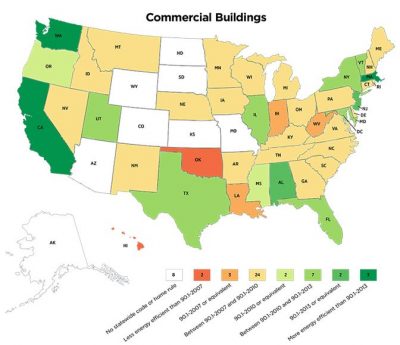
In 2015, the International Code Council published a new version of its International Energy Conservation Code (IECC). This model energy code provides states and jurisdictions code-ready language to adopt in whole or in part. It has been updated every three years since 2000. Today, a majority of states base their commercial building energy codes on [...]
The Lighting Controls Association is proud to offer an advance look at a selection of new products that will be displayed by members at LIGHTFAIR International May 9-11, 2017 in Philadelphia. While some can be seen here, many more await at member booths, so be sure to visit! ACUITY BRANDS nLight ECLYPSE nLight ECLYPSE extends [...]
By Craig DiLouie, LC, CLCP Many utilities offer incentive programs to customers to get them to use less energy. This is based on the premise that it is often cheaper to pay customers to use less energy than to build new generating capacity to satisfy future power demand. The simplest and most popular type of [...]
We’re very proud to unveil the new look for the Lighting Controls Association website. The new site offers the same robust content as the old but with a cleaner format. Here are the major changes: * Clean, attractive design * New software for The Buzz, bringing you all LCA member social media feeds in one [...]
U.S. real GDP slowed to 1.6% in 2016, the lowest growth rate since 2011. However, the outlook for construction spending in 2017 continues to be positive for all market sectors. The AIA’s semi-annual Consensus Construction Forecast, a survey of the nation’s leading construction forecasters, is projecting nearly 6% growth in nonresidential construction spending in 2017, [...]
In the fall of 2016, the Lighting Controls Association invited subscribers of lightingCONTROL, its monthly newsletter, to participate in a survey. The goal of the survey was to determine satisfaction with LCA services. LCA filtered the responses to separate manufacturers, manufacturer representatives and “other” (press, academic, etc.) respondents, which were regarded separately. The remainder included [...]
The ANSI/ASHRAE/IES 90.1 energy standard provides a model energy code to jurisdictions interested in regulating the energy-efficient design of commercial buildings. The International Energy Conservation Code (IECC) recognizes 90.1 as an alternative compliance standard. ASHRAE recently published the 2016 version, which supersedes the 2013 version. The U.S. Department of Energy (DOE) recognizes the 2013 version [...]
Commercial building energy codes contain detailed mandatory lighting control requirements related to buildings such as K-12 schools. The high-performance school design movement extends these requirements by demanding additional flexibility to support the contemporary learning experience in today’s classroom. This application guide by the Lighting Controls Association describes various control strategies that can be applied to [...]
The interNational Association of Lighting Management Companies (NALMCO) has launched the Certified Lighting Controls Professional (CLCP) designation. With no prerequisites, the CLCP is open to all applicants. Intended to demonstrate a high degree of general knowledge in lighting controls, the CLCP is based on the Lighting Controls Association’s Education Express online education system. This high-quality [...]
Traditionally, outdoor lighting was automatically turned ON and OFF at the circuit level by an astronomical time switch or photosensor. Energy codes are now promoting power reduction during dusk-to-dawn lighting operation. Coupled with advances in wireless communication and intelligent control, the result is dramatic changes in how outdoor lighting is controlled. New construction Twenty-four states [...]
Vehicles are expected to play a big part in the Internet of Things. By 2020, 250 million connected vehicles will be on the road, creating new services and driving capabilities, according to Gartner, Inc. Infotainment is high in demand, though other capabilities are enabled, including crash warning, traffic violation warning and relaying weather, traffic and [...]
About two-thirds (64%) of the United States is covered by prescriptive lighting rebates, according to BriteSwitch, a rebate fulfillment company. These rebates can significantly reduce the installed cost of new lighting in existing buildings and improve payback by 20-25%, which would reduce a two-year payback to about 1.5 years. Rebates became popular in the 1990s [...]
GDP ended 2015 strongly with an annual estimated growth rate of 2.4%. The overall U.S. economy continues to improve. Positive economic conditions continue to support growth in demand for nonresidential construction. The nonresidential construction sector enjoyed double-digit growth in 2015, and strong momentum is expected to continue in 2016. The AIA’s semi-annual Consensus Construction Forecast, [...]
As adoption of dimmable lighting grows, task tuning, a lighting control strategy, is becoming increasingly viable as a way to save energy while increasing occupant comfort. Also called “institutional tuning” and “high-end trim,” task tuning involves reducing lighting in a space based on IES-recommended maintained task light level requirements or user preference for individual spaces [...]
Lighting controls are now required by energy codes in the large majority of new commercial buildings. As demand for controls continues to increase, so does demand for commissioning as a quality assurance process. This process helps ensure that installed controls satisfy both the design intent and owner requirements by minimizing error across the construction process. [...]
The U.S. Department of Energy (DOE) has begun releasing results from the 2012 Commercial Buildings Energy Consumption Survey (CBECS). The CBECS is an estimated profile of the U.S. commercial building stock based on an interviewed sampling. Information includes number of buildings, floorspace, age, building type, region, energy consumption, end-use equipment and more. DOE defines a [...]
The U.S. Department of Energy (DOE) has issued new energy standards for general-service fluorescent lamps that are expected to reduce availability of standard 4-ft. linear and 2-ft. U-bend 32W T8 lamps as well as some reduced-wattage T8 lamps. The rules go into effect January 26, 2018. After that date, distributors may continue to sell their [...]
The overall economy continues to improve, with all major economic indicators signaling a trajectory of continuing growth. GDP ended 2014 very strongly, with forecasts calling for 3% growth in 2015. Business confidence reached a level of 61, signaling average belief in expansionary business conditions. Economic conditions are supporting growth in demand for construction activity, particularly [...]
In 2014, the International Code Council published the 2015 International Energy Conservation Code (IECC), a model residential and commercial building energy code. ICC states: “This code shall regulate the design and construction of buildings for the use and conservation of energy over the life of each building.” The IECC is not a code in itself [...]
Given current adoption of commercial building energy codes, conventional wisdom indicates that LED lighting is frequently specified with automatic lighting controls. However, there is little public data available concerning market penetration of LED lighting, how often it is specified as controllable and with lighting controls, owner preferences, and how satisfied specifiers and installers are with [...]
Update: On September 26, 2014, the U.S. Department of Energy (DOE) named the ASHRAE/IES 90.1-2013 energy standard as the new national energy reference standard, superseding the 2010 version in effect until then. Within two years, all states in the United States must put into effect a commercial building energy code at least as stringent as [...]
Outdoor lighting controls is undergoing a mini-revolution that offers new design and selling opportunities while challenging electrical professionals to stay on top of technological change. Traditionally, outdoor lighting control was relatively simple. A typical scheme featured a controller providing automatic ON/OFF based on time of day (using an astronomical time switch) or daylight (photosensor). The [...]
With efficacy and service life steadily increasing and costs declining by about 18 percent each year (Memoori, 2014), the LED revolution continues to develop at a rapid pace. LED’s inherent compatibility with digital control, aided by other trends, is setting the stage for the next LED revolution: smart lighting control. Many LED products are sold [...]
Light is comprised of wavelengths that the human eye interprets as colors. For an object to be perceived a certain color, that color must be present both in the light striking an object and the object reflecting the light towards the observer’s eye. Because of this, the choice of lamp for white-light general lighting can [...]
On October 18, 2013, all states were required by the U.S. Department of Energy (DOE) to put in place a commercial building energy code at least as stringent as the 2010 version of the ASHRAE/IES 90.1 energy standard. Eight states are in compliance as of October 2013. States are expected to adopt 90.1-2010 in whole [...]
A survey of two groups of professionals describing themselves as electrical contractors and energy consultants, conducted by the Lighting Controls Association from its lightingCONTROL newsletter database, suggests automatic lighting controls are becoming more popular in lighting retrofits. Respondents reported lighting controls were considered in over 50 percent and installed in over 30 percent of their [...]
In September 2012, the Lawrence Berkeley National Laboratory published, Responsive Lighting Solutions for the General Services Administration (GSA). The report provides insight into the viability of highly responsive lighting control systems. It reports the results of installing advanced lighting controls in five Federal buildings. The existing lighting in these buildings was upgraded. A number of [...]
Demand for electricity in the United States has gone up in all but four years since 1949. The Department of Energy predicts growth in capacity of 0.6% per year through the year 2040. Many states and utilities have long considered energy efficiency a resource for satisfying growing demand. According to a study by the American [...]
Despite a national recovery from the recession in 2009, construction activity in the United States continued to spiral downward in following years. Total construction spending declined to under $800 billion in 2011 from its peak of more than $1 trillion in 2008. In 2012, the market turned a corner and achieved a level of growth [...]
The Energy Policy Act of 2005 created the Energy-Efficient Commercial Buildings Tax Deduction (CBTD) to encourage owner investment in energy-efficient building systems. The CBTD establishes a special tax deduction rewarding investment in energy-efficient interior lighting, HVAC/hot water systems and building envelope, subject to a cap of up to $1.80/sq.ft. It’s an accelerated tax deduction, meaning [...]
The Lighting Controls Association has announced the results of a recent survey of regular site users. The purpose of the survey, which was distributed to 15,000 subscribers of the LCA newsletter lightingCONTROL, was to determine satisfaction with the LCA website as well as the popularity of potential features. Respondents totaled 241, or 1.6%. The first [...]
Lighting quality is a critical consideration in effective lighting design, and often should take priority over energy savings and the economies of cost. But what is lighting quality? It goes beyond energy and cost and light levels to include brightness, light distribution, color, aesthetics, daylight, ease of use for controls, and other issues. While many [...]