The Tesla Special Citation for Innovative Lighting Controls was created as a new facet of the National Lighting Bureau’s Tesla Awards, which recognize excellence and innovation in lighting design, advancing best lighting practices to create an inviting, healthier, and more sustainable future. The Lighting Controls Academy is proud to sponsor the Special Citation for Innovative Lighting Controls and congratulates this year’s winner.
The 2026 winning project is Arvest @ Ledger Offices in Bentonville, AK, which also received a Tesla Award of Excellence. Lighting and control design by Borealis Lighting Studio. Photography by Todd Mason of Halkin Mason Photography.
This project benchmarks a broader definition of sustainable lighting—expanding performance beyond watts per square foot to integrate carbon accountability, material transparency, and human wellbeing from planning through construction. The installation achieves an installed lighting power density of 0.56 W/sq.ft., setting a low operational baseline while treating material health, life-cycle impacts, and visual comfort as co equal design criteria.
From schematic design onward, life-cycle assessment (LCA) checkpoints were embedded directly into the specification workflow, making carbon a design input rather than a close out calculation. Manufacturers with LCA reporting underway represented 62% of the lighting budget, including 18% with product specific EPDs; 72% of luminaire types were supported by product specific or industry average LCA data. Architectural performance luminaires from LCA invested manufacturers carried a 0% green premium, demonstrating that transparency can be commercially viable. Integrating LCA “gates” at key specification milestones created a repeatable method for supplier engagement and carbon aware alternates, turning transparency into a daily design decision tool.
Material transparency similarly guided fixture selection: architectural performance fixtures and nearly half of decorative fixtures came from manufacturers engaged in EPD development, establishing a practical pathway for incremental embodied carbon reduction. A representative decision in the executive suite achieved a ~30% reduction in cradle to gate GWP per 4 ft (31.8 vs 45.4 kg CO₂e) across raw materials, transport, and assembly.
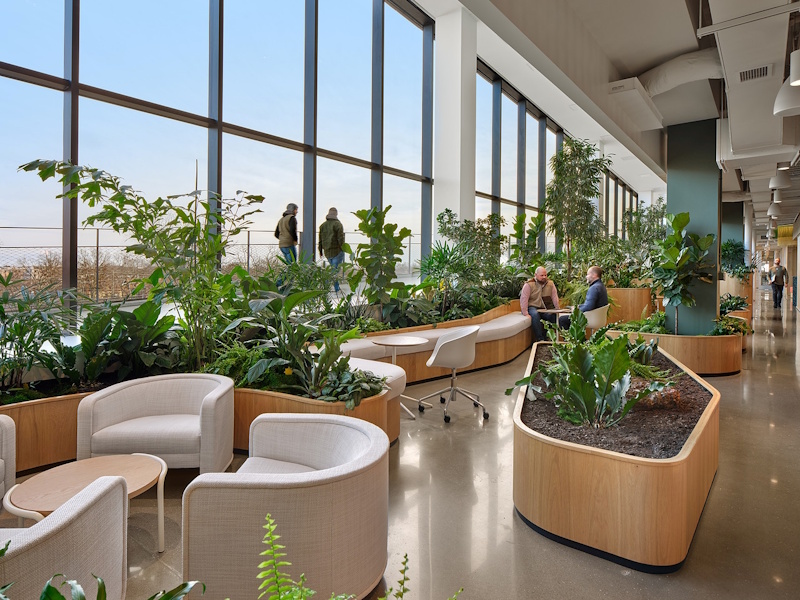
Environmental responsibility and human wellbeing were considered interdependent. The workplace is organized as an interior–exterior loop with terraces, a bikeable/walkable circulation path, and integrated planting, encouraging daily movement and nature connection. Approximately 67% of regularly occupied spaces provide daylight and views, reducing daytime electric light demand while strengthening visual comfort and circadian support.
The lighting composition is intentionally restrained to preserve clarity: continuity supports orientation, highlight is applied only where meaningful, and contrast is protected to maintain spatial legibility. Controls operate as both efficiency engine and experiential tool—daylight harvesting trims perimeter loads; high end trim and granular zoning secure peak hour savings; and occupancy/vacancy strategies limit off hours use. Circadian aligned scheduling modulates spectrum and melanopic stimulus, particularly in windowless rooms where skylight simulated fixtures deliver WELL-aligned cues. In conference spaces, a preprogrammed east to west “uplight wave” provides subtle biophilic micro break prompts without additional energy use. Commissioning and post occupancy tuning maintain performance while supporting individual preference through task level dimming.
Together, these decisions form a replicable, future focused framework in which energy performance, embodied carbon transparency, material health, and human experience operate as an integrated system—advancing sustainable lighting evaluation decisively beyond traditional watt density metrics.
People walk the exterior bike ramp, reinforcing daily movement and daylight exposure; this interior–exterior continuity supports wellbeing while advancing the project’s holistic sustainability agenda.
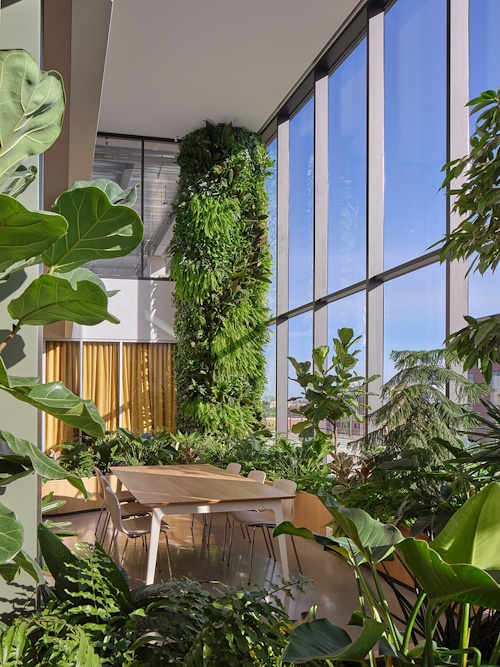
Column integrated vegetation thrives in daylight; modeling confirmed no supplemental grow lighting required, enabling minimal perimeter lighting while maintaining comfort and views.
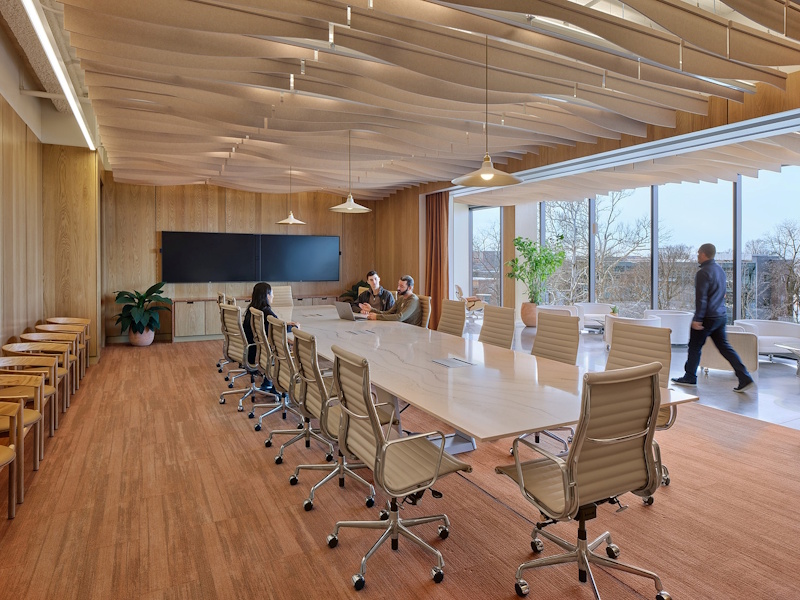
Pre scheduled uplight wave sweeps east to west in 3–5 minute cycles, offering subtle biophilic cues that encourage pause, movement, and reset.
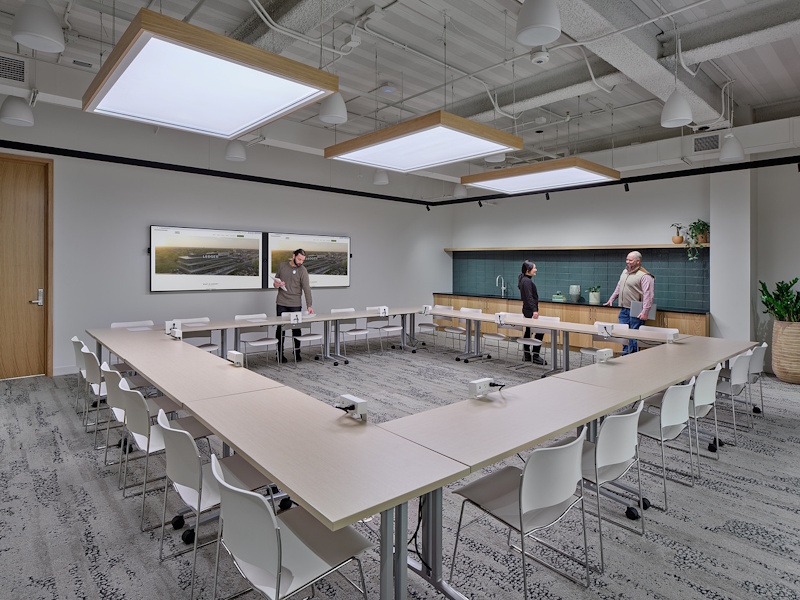
Skylight simulated fixtures with 2700K–6500K circadian sequences deliver WELL aligned melanopic stimulus and time of day cues in windowless quiet rooms and labs.
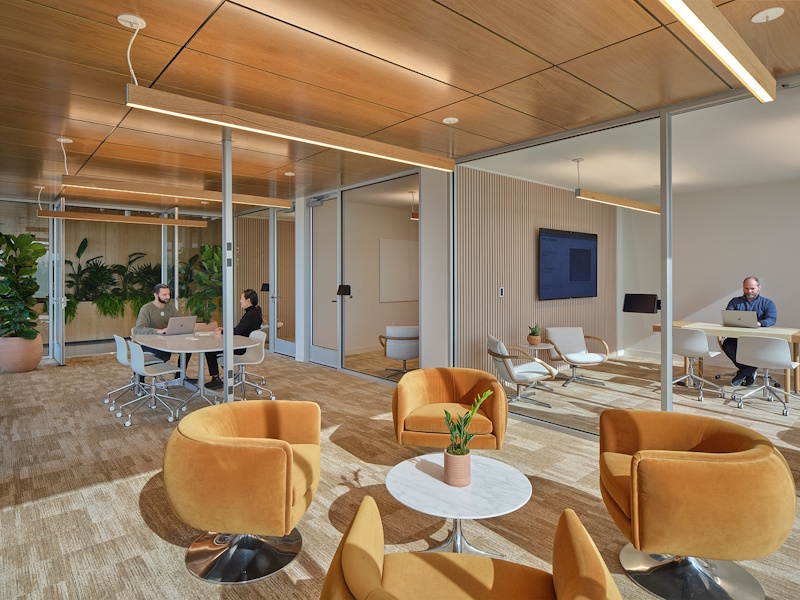
Executive linear achieves ~30% lower cradle to gate GWP per 4 ft—31.8 vs 45.4 kg CO₂e—through lower impact materials, transport, and assembly.
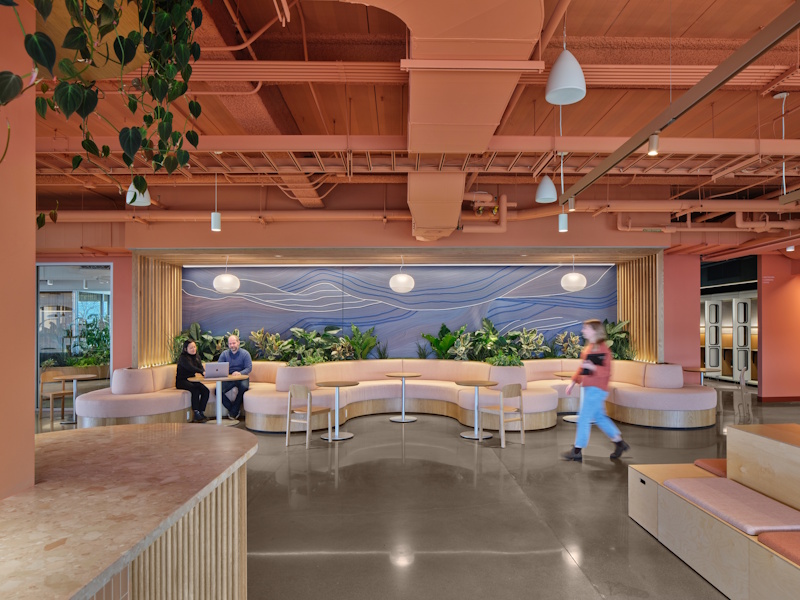
Café supports community use with seating choice and warm tones, enabling shifts between work modes while reducing daytime reliance on electric light.
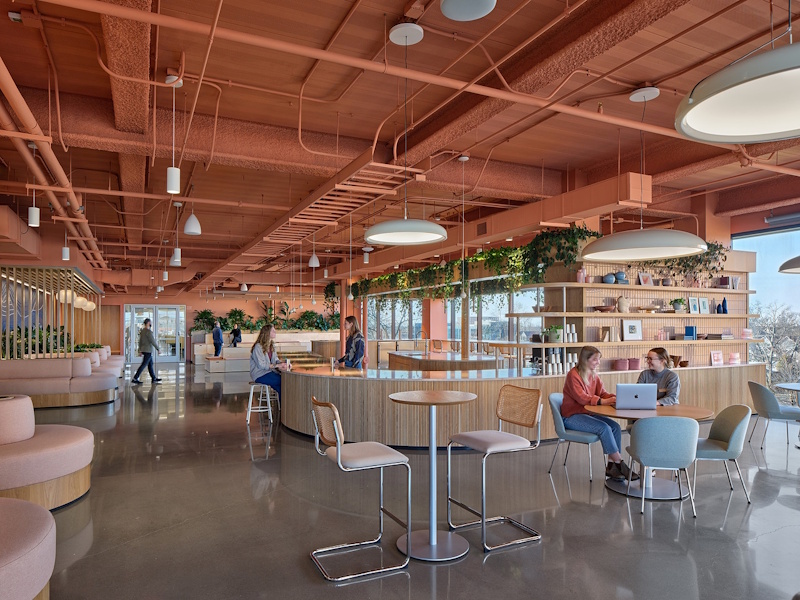
Layered café lighting supports quiet work to gatherings while maintaining high efficiency, consistent with the project’s 0.56 W/sf lighting density.